

Password Reset
Forgot your password? Enter the email address you used to create your account to initiate a password reset.


Forgot your password? Enter the email address you used to create your account to initiate a password reset.
7 Minutes
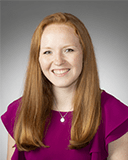 Jayde Hooven-Davis, MD, a third-year fellow in the Division of Pediatric Endocrinology at UPMC Children’s Hospital of Pittsburgh, will join the Division as assistant professor of pediatrics in July 2026. Dr. Hooven-Davis’ faculty position will be primarily research focused studying how children and families use current and emerging diabetes technology in everyday life and designing interventions to optimize outcomes for every child with type 1 diabetes. Dr. Hooven-Davis also completed her residency training in pediatrics at UPMC Children’s, having served as a chief resident in her final year. She earned her medical degree from Penn State College of Medicine and recently her master’s degree of science in clinical research at the University of Pittsburgh.
In the interview below, Dr. Hooven-Davis discusses her early personal experiences living with diabetes, how that experience shaped her pursuit of medicine and research, and her current research projects and interests that will carry over into her faculty position.
Q: How and Why Did you Choose Medicine as a Career and Specifically Pediatric Endocrinology?
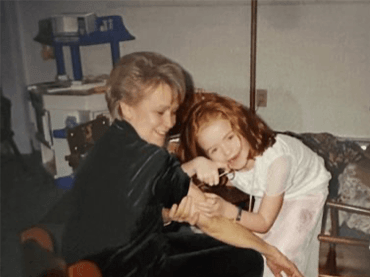
Dr. Hooven-Davis as a child giving her grandmother a shot “because she wanted to know what an insulin shot felt like.”
A: My journey to becoming a pediatric endocrinologist began long before I entered medical school. I was diagnosed with type 1 diabetes when I was 6. When you are that young, a lot of the challenge is not medical. It’s trying to understand why you are different from everyone else around you and not wanting other people to know that I had diabetes.
After participating in diabetes camp and being around other kids with diabetes, I realized that diabetes may be a part of my life, but it doesn’t have to define my life. Later, volunteering as a diabetes camp counselor, I realized that I could mix my love of education with medicine, teaching patients and families – helping them understand what is happening in their bodies and how to manage it over time.
Q: How Did Your Training at UPMC Children’s Influence Your Decision to Remain in Pittsburgh for Fellowship and Soon as Faculty?
A: When I applied to residency, I looked at programs at large academic centers where I would have the opportunity to train for both residency and fellowship. I wanted exposure to the breadth and depth of pediatrics and endocrinology that a tertiary care center could offer. More importantly, I wanted an environment where I could thrive. When I interviewed at UPMC Children’s, I felt the sense of community and teamwork among the residents, faculty, and clinical staff. It’s amazing that you could be working with a world-renowned expert who is also so approachable and willing to teach. During my chief residency, I gained a broader perspective across the Department of Pediatrics, expanded my teaching and administrative skills, and grew impactful relationships with people within and outside of endocrinology. Staying here for fellowship made sense professionally and personally.
Q: What Will Your Clinical Practice Look Like Once You Become a Faculty Member?
A: I will continue caring for patients across pediatric endocrinology, including diabetes, but my interests extend beyond diabetes. While I’m deeply committed to diabetes from a research and quality improvement standpoint, clinically I’m drawn to the complexity of endocrinology.
I’m especially energized by diagnostic challenges and patients with multiple, intersecting conditions. In a tertiary center, many children have complex medical conditions or multiple hormone issues – I love figuring out how everything fits together like solving a puzzle.
At the same time, my lived experience with diabetes can be a powerful tool. I’m intentional about when I share my own diagnosis, but when it helps build trust, especially with adolescents, I will leverage my own experiences to connect, support, and guide patients through the many facets of living with diabetes.
Q: What Are Your Main Research Interests Right Now and What Specific Projects Have You Been Working on as an Endocrinology Fellow at UPMC Children’s?
A: Over the past several years, diabetes technology has transformed care for children with type 1 diabetes. Continuous glucose monitoring systems and automated insulin delivery platforms are now widely used, and many patients experience meaningful improvements in glycemic control with these technologies. However, those improvements are not consistent across patients. Some children see substantial gains in desired glucose ranges and overall control of their diabetes, while others experience only modest benefit. That variation is what drives my research. In clinic, it’s clear the difference is not explained by the device itself. It’s how technology fits into a patient’s daily life, how families approach management, and how adolescents interact with the system as they become more independent in their care.
My current work includes qualitative research with adolescents and families to better understand how they use devices, what challenges they encounter, and how family structure, routines, and expectations influence management. The goal is to move beyond assuming that access to technology alone improves outcomes and instead understand what allows some patients to use these tools successfully while others struggle.
Long term, my intention is to use that information to design patient-facing and provider-facing tools that help optimize technology use after it has already been adopted. A lot of innovation in diabetes focuses on developing new devices, which of course is important. My interest is in improving how we use the tools that already exist. That includes education strategies, decision-support tools, and approaches that can help patients and families respond more effectively to day-to-day challenges.
I’m also currently working on an application for K-12 grant funding from the National Institutes of Health for a program called Diabetes-Docs: Physician-Scientist Career Development Program (DiabDocs). It’s a national program coordinated by Stanford University that supports mentored-research in type 1 diabetes at your home institution that will allow me to further compete for a K23 career development award.
Q: You Have Also Been Involved in Quality Improvement Initiatives During Fellowship. Can You Discuss Some of That Work?
A: One project I collaborated on involved developing a ketone action plan for patients. Families often know that ketones are serious, but it can be difficult to know what to do in the moment when a child is sick or their glucose level is running high. The action plan provides step-by-step guidance, similar to an asthma action plan, outlining when to check ketones, how much insulin to give, and when to seek additional care.
The goal was to make decision making easier for families and to prevent situations from escalating to emergency department visits or hospitalization. We distributed the plan widely across our patient population, and we are now evaluating its impact as part of that quality improvement effort.
Q: What Areas of Work are You Interested in Developing Within the Division at UPMC Children’s?
A: I hope to continue building a research program around diabetes technology and to stay closely involved as new devices emerge. As technology is changing so quickly, I want to help translate innovation into practical use for patients and our care team — and serve as a go-to resource in the division for how these systems work, who benefits most, and what’s coming next. That role perfectly aligns with my research interests and desire to teach.
I’m also eager to stay involved with Camp Courage – an American Diabetes Camp that our team helps service as medical staff. As that type of experience and environment had such a major impact on me growing up, if I can be a part of that in the future - an important place where kids can build confidence and support outside of the clinical setting, I will be there.

