

Password Reset
Forgot your password? Enter the email address you used to create your account to initiate a password reset.


Forgot your password? Enter the email address you used to create your account to initiate a password reset.
9 Minutes
The UPMC Adult Congenital Heart Disease (ACHD) Center provides long-term, comprehensive care for patients with congenital heart disease (CHD) across every stage of life. The Center bridges the Heart Institute at UPMC Children's Hospital of Pittsburgh and the UPMC Heart and Vascular Institute, integrating pediatric and adult cardiology with interventional cardiology, cardiac surgery, advanced imaging, and other disciplines under a single program. Accredited by the Adult Congenital Heart Association (ACHA) as a Comprehensive Care Center, it is the only program of its kind in western Pennsylvania.
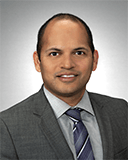 Arvind Hoskoppal, MD, director, UPMC Adult Congenital Heart Disease Center, leads a multidisciplinary team of ACHD cardiologists and coordinates care with subspecialty groups at UPMC Children's and the UPMC Heart and Vascular Institute.
 This includes the cardiac catheterization laboratory, directed by Bryan H. Goldstein, MD, FACC, FSCAI, as well as cardiac surgery, electrophysiology, and advanced imaging teams.
This structure allows care for patients with complex anatomy and prior surgical repairs to be planned and delivered collaboratively across specialties rather than within isolated services.
As the only ACHA-accredited Comprehensive Care Center in western Pennsylvania, the UPMC ACHD Center also serves as a regional resource for cardiology practices across health systems. The Center provides specialized congenital evaluation and intervention while coordinating longitudinal care with patients’ established cardiologists.
A recent case managed by the UPMC ACHD Center highlights the clinical complexity that adults with CHD can present decades after initial repairs, and the kind of coordinated, multidisciplinary approach the UPMC ACHD Center is structured to deliver. The patient had spent most of his adult life out of specialized care, presented with progressive symptoms in his seventh decade, and required a procedural strategy that did not fit standard surgical or transcatheter pathways.
A 66-year-old man with congenital pulmonary valve dysplasia, surgically repaired in early childhood at an outside hospital which no longer performs CHD care, presented with progressive heart failure, atrial fibrillation, and declining functional capacity after decades without specialized CHD follow-up. He was initially evaluated at a regional cardiology program and subsequently referred to a non-UPMC tertiary center for surgical consultation.
On evaluation, the patient was found to have severe pulmonary insufficiency, tricuspid valve insufficiency, and ventricular dysfunction. After multidisciplinary review at the referring institution, conventional surgical pulmonary valve replacement was determined to be too high of an operative risk. The chief cardiothoracic surgeon at that institution contacted Dr. Goldstein to discuss whether a transcatheter pulmonary valve replacement could be performed.
After the patient's records were reviewed, the UPMC ACHD Center team became involved and obtained additional cardiac imaging, including dedicated computed tomography to define the right ventricular outflow tract and pulmonary artery anatomy. The case was presented at the UPMC Children's multidisciplinary surgical conference, with input from interventional cardiology, cardiac surgery, and the cardiac imaging team.
Imaging demonstrated that the main pulmonary artery was too large to provide a suitable landing zone for a standard transcatheter pulmonary valve implant. Conventional surgical valve replacement remained high risk.
The team proposed a hybrid strategy designed to make a Harmony® transcatheter pulmonary valve replacement feasible without the need for sternotomy or cardiopulmonary bypass: a limited anterior chest approach to access the main pulmonary artery, followed by surgical plication of the anterior wall to narrow the pulmonary artery and create an adequate landing zone for standard transcatheter valve deployment.
 The procedure was performed in the UPMC Children’s Heart Institute cardiac catheterization laboratory with the surgical and interventional teams working in sequence. Mario Castro Medina, MD, performed the surgical portion. A baseline angiogram was obtained to define main pulmonary artery anatomy. Plication sutures were then placed to narrow the vessel, followed by repeat angiography to assess the resulting landing zone. The first reassessment showed improvement but insufficient narrowing for valve placement, prompting additional surgical plication. A repeat post-plication angiogram confirmed an adequate landing zone, and a Harmony transcatheter pulmonary valve was successfully implanted.
The patient was discharged after two nights and has had substantial improvement in symptoms at follow-up. The patient’s ongoing care is being shared between the UPMC ACHD Center and the patient's referring heart failure cardiologist, with longitudinal management coordinated across institutions.
"This is a good example of collaboration, referrals, and expertise – what we do every day at UPMC Children’s," Dr. Goldstein says. "There was not an easy solution for this patient, but our team was able to deliver a complex approach and then provide ongoing management that will benefit the patient in the short- and long-term. And we do so in collaboration with the referring team, even when outside of the UPMC network."
This case example shows a broader principle in ACHD care, that standard procedural pathways often do not apply. Patients may have undergone prior repairs using techniques that are no longer standard, resulting in anatomy that requires individualized assessment and planning. For these patients, the value that the UPMC ACHD Center provides is not in a single technology or procedure, but in the ability of the clinical teams to integrate imaging, catheter-based intervention, and surgical expertise in a coordinated manner.
CHD is a lifelong condition. Anatomy, prior repairs, and physiology established in childhood continue to influence or define a patient's clinical course into adulthood. Specialized expertise in congenital anatomy, surgical history, and the long-term consequences of pediatric repairs is concentrated in centers built around this clinical dynamic. Because the UPMC ACHD Center spans both UPMC Children's Heart Institute and the UPMC Heart and Vascular Institute, patients can access pediatric-trained congenital expertise alongside adult cardiac and surgical services as a single program rather than separate referrals.
"One of the questions I get asked all the time is why adults are cared for at a children's hospital," Dr. Hoskoppal says. "It is still congenital heart disease. The expertise to understand CHD is here, and we work together to direct patients to the right place for the procedures and interventions they need."
Care for adults with CHD frequently requires movement between pediatric and adult settings, as well as collaboration across interventional cardiology, surgery, electrophysiology, and imaging. Within the UPMC ACHD Center, this coordination is built into the operating infrastructure of the program.
"If you think about how care is typically delivered, it is often siloed: interventional cardiology, surgery, adult cardiology, pediatric cardiology," Dr. Goldstein says. "What has been built here is a model that breaks down those silos so that patients are directed to the right provider, at the right place, at the right time."
The need for this kind of care model is driven in part by the natural history of CHD. Advances in pediatric cardiology and cardiac surgery have produced progressively higher rates of survival into adulthood, creating a large and growing population of adults with repaired or palliated congenital lesions. Many of these patients, however, particularly those treated decades ago, have not been consistently followed in specialized centers.
"The majority of adults with CHD are either lost to follow-up or not being seen in an accredited center," Dr. Hoskoppal says. "A lot of these patients were treated 40, 50, 60 years ago, before ACHD existed as a field. Even those who stayed in care as children were often discharged from cardiology in early adulthood, because at the time we did not recognize that they would need lifelong follow-up."
Patients who disengage from congenital cardiac care often present later with complications that have progressed over time, including heart failure, arrhythmias, and valvular dysfunction. Published data show that outcomes are improved when patients are managed in ACHA-accredited centers, particularly with respect to heart failure and transplant care.
"Even when patients come back into care, their outcomes are worse if they have been out of follow-up," Dr. Goldstein says. "Some of those changes are permanent. A patient who has been in atrial fibrillation for years with a dilated atrium may remain in atrial fibrillation for the rest of their life, even after the underlying causal lesion is treated."
To reduce the number of patients who fall out of care, the UPMC ACHD Center has developed a structured transition program for adolescents with CHD.
"We start the transition process in the teenage years and continue until patients are fully transferred into the adult model of care," Dr. Hoskoppal says.
Adolescence and early adulthood represent a high-risk period for disengagement from care. Without structured transition, patients may delay follow-up until symptoms develop, at which point disease may be substantially more advanced. Because the UPMC ACHD Center is a unified program, the transfer between care settings can be coordinated seamlessly.
The new UPMC Children's Heart Institute facility, which opened its doors in June 2026, is designed to bring cardiac services across the Heart Institute into a single, coordinated environment. Imaging, catheterization, periprocedural and outpatient care are integrated to reduce transitions between care environments and improve continuity for the full range of patients treated by the Heart Institute, from neonates to adults with pediatric and CHD. Multiple hybrid catheterization labs, advanced cardiac MRI capabilities, including a state-of-the-art hybrid MRI-Catheterization suite and direct access between procedural and intensive care environments allow for seamless movement of complex patients between phases of care.
"We are bringing everything under one roof, and that roof is the heart," Dr. Goldstein says. "In the new facility, every aspect of a patient's care has been designed around fewer handoffs, with a team who knows the patient and stays with them throughout their care."
For ACHD patients in particular, who often require repeated evaluation and intervention over time across multiple disciplines, the new facility supports the same principle that defines the UPMC ACHD Center: complex congenital cases are best managed when imaging, intervention, surgery, and longitudinal care are coordinated within a single team. The hybrid pulmonary valve case illustrates what this looks like in practice.
"Patients are often referred to us for the complexity of their condition or for procedures that are not available locally," Dr. Hoskoppal says. "But the goal is not to take those patients away from their referring physicians. We want them to come here for what they need and then return to the providers who know them. That is how we deliver care that lasts."
To refer a patient to the UPMC Adult Congenital Heart Disease Program, please call 412-692-3158 or e-mail ACHD@upmc.edu.

