


Password Reset
Forgot your password? Enter the email address you used to create your account to initiate a password reset.


Forgot your password? Enter the email address you used to create your account to initiate a password reset.
3 Minutes
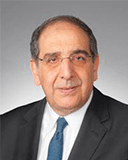 José-Alain Sahel, MD, distinguished professor and chairman of the Department of Ophthalmology at the University of Pittsburgh School of Medicine and director of the UPMC Vision Institute, and an international team of clinicians and scientists, from Paris, Basel, London, and Pittsburgh, published new evidence in the New England Journal of Medicine demonstrating encouraging results following optogenetic therapy in a small group of patients with retinitis pigmentosa.
Retinitis pigmentosa is a complex group of genetic disorders that cause the light-sensitive cells in the retina to break down over time, leading to severe vision loss and blindness. There is currently no cure for retinitis pigmentosa, except for one specific, rare gene defect, but Dr. Sahel and his colleagues have spent many years researching a promising treatment known as optogenetics therapy, which combines gene therapy to reprogram retinal cells with specially engineered goggles to activate the reprogrammed cells, partially restoring vision.
This early-stage study included 10 individuals with advanced retinitis pigmentosa who received an injection containing a gene the produces a light-sensing protein called ChrimsonR into retinal ganglion cells. Following the injection, participants received a visual prosthetic system – including goggles and a portable processor – that converted visual information into specific wavelengths of light designed to activate the protein.
Results were encouraging, with most eye-related side effects reported as mild or moderate. Following treatment, seven out of 10 participants showed improved light sensitivity, and six made improvements large enough to qualify as clinically meaningful. Although the treatment did not restore normal vision or reading ability, some individuals could better detect when an object was present and determine where it was located while using the goggles. Additionally, the study demonstrated that in some patients, visual signals reached and were processed by the visual cortex when study participants viewed objects, meaning visual information reached the brain.
This latest study builds on previous landmark research published by Dr. Sahel and his longtime collaborator Botond Roska, MD, PhD, of the Institute of Molecular and Clinical Ophthalmology Basel in Nature Medicine in 2021, in which the pair demonstrated the first-ever instance of vision restoration in a human using optogenetic therapy. Dr. Sahel and Dr. Roska recently received the prestigious António Champalimaud Award, the largest award in ophthalmology, for their ongoing contributions to vision restoration and the exploration of new solutions for patients with inherited retinal disorders.
This research was supported by GenSight Biologics and conducted as part of the PIONEER clinical trial (NCT03326336).

