Password Reset
Forgot your password? Enter the email address you used to create your account to initiate a password reset.


Forgot your password? Enter the email address you used to create your account to initiate a password reset.
3 Minutes
 A two-year initiative led by Drew Redepenning, MD, third-year resident in the Department of Physical Medicine and Rehabilitation at the University of Pittsburgh aims to expand access to adaptive gaming for individuals living with spinal cord injury. The project, “Empowered eSports: A Community-Based Adaptive Gaming Program for Individuals With Spinal Cord Injury,” is supported by funding from the Craig H. Nielsen Foundation and is being conducted in collaboration with the University of Pittsburgh Model Center on Spinal Cord Injury and the Pittsburgh Chapter of the United Spinal Association.
The project grew out of research showing that many people are interested in adaptive gaming but run into the same practical problems. Specialized controllers can be expensive, many clinicians are unfamiliar with how the systems work, and patients often do not know what equipment exists or how to set it up.
“We kept seeing the same issues come up. People couldn’t afford the equipment, didn’t know what to get, or didn’t have anyone to help them set it up,” Dr. Redepenning says.
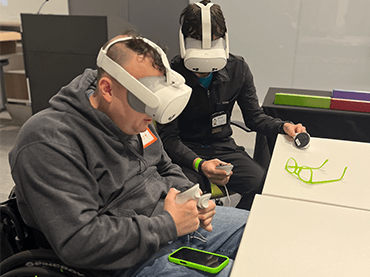
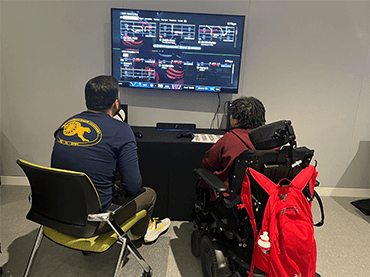
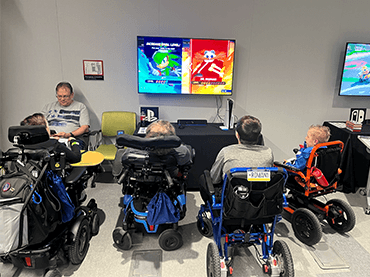
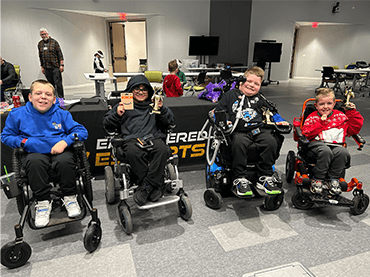
The program runs regular in-person gaming sessions where participants use adaptive controllers, try different devices, and get help configuring equipment for their own needs. Staff assist with setup and troubleshooting so participants can focus on learning how the systems work and how to play using their preferred games and platforms.
These sessions also give people a chance to see how others use adaptive systems. Participants can compare equipment, learn new setup approaches, and observe how different control methods accommodate different physical abilities.
Some participants need more individualized support. The project includes one-on-one assessments to determine which controllers and input systems fit a person’s physical abilities, endurance, and gaming goals. Equipment choices depend on the types of games someone wants to play, the platform they use, and the kinds of movements they can repeat reliably.
“Choosing equipment is a process that involves more than just what someone can physically do,” Dr. Redepenning says. “It has to match the games they want to play and how those games are controlled. It’s involved and highly patient-specific.”
Grant funding also helps cover the cost of adaptive gaming equipment for participants who would otherwise be unable to afford it. After equipment is provided, staff continue working with participants to ensure systems are properly configured and remain usable over time.
Another part of the project focuses on education. Many people cannot attend in-person sessions, so the team is expanding online materials that explain how adaptive gaming systems work and how they can be customized. This effort builds on GamingReadapted.com, a website developed by Dr. Redepenning that provides instructional guides, equipment descriptions, and demonstration videos.
“Many people simply don’t know what equipment is available or how to get started,” Dr. Redepenning says.
By combining equipment access, hands-on support, and practical education, the Empowered eSports project is helping individuals with spinal cord injury participate in gaming activities that support social interaction and recreation.