


Password Reset
Forgot your password? Enter the email address you used to create your account to initiate a password reset.


Forgot your password? Enter the email address you used to create your account to initiate a password reset.
7 Minutes
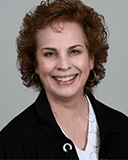 Mary Angela O’Neal, MD, is a neurologist specializing in functional neurologic disorders and women’s neurology. She joined the UPMC Department of Neurology in late 2025 after more than a decade at Brigham and Women’s Hospital and Harvard Medical School, where her clinical and academic work focused on the development of structured care models for patients with complex neurologic conditions. At UPMC, she serves as director of the Functional Neurologic Disorders program, where her work centers on improving diagnostic accuracy, strengthening multidisciplinary treatment pathways, and expanding education across neurology and related specialties.
Q: How do You Think About Functional Neurologic Disorders in Clinical Practice?
A: Functional neurologic disorders are common, and they are often profoundly disabling, but they are still not understood as well as they should be by many clinicians. These are patients with neurologic symptoms that are real and disabling, but the symptoms are not explained by structural disease in the way many providers are used to thinking about neurologic illness. That can include functional seizures, weakness, tremor, gait problems, and other symptoms that are seen every day in neurology practice.
It is important to understand that the absence of structural disease does not mean the absence of illness. That is where people get into trouble. If you approach these patients as though the problem is not real because the MRI is normal, you are immediately on the wrong footing. The diagnosis is not made because imaging is negative. It is made by recognizing positive clinical features on examination and understanding the disorder well enough to explain it clearly.
This became an important area of work for me in part because I was seeing so much of it. Women are affected disproportionately by functional neurologic disorders, and because I was already doing women’s neurology, I saw many of these patients in my clinics. At a certain point, I had to decide whether I was going to keep treating this as something peripheral or whether I was going to really learn how to manage it well. I chose the latter. That meant working with colleagues who had expertise in functional seizures, spending time learning from leaders in the field, and helping build models of care that addressed more than just one narrow aspect of the disorder. Over time, it became a major part of my work because the need is enormous and because these patients do much better when their care is organized and deliberate rather than fragmented.
Q: Why Are Functional Neurologic Disorders Often Misunderstood or Mishandled in Clinical Settings?
A: There are several reasons, and they tend to reinforce one another. One is a lack of understanding. If a clinician has not been trained to recognize functional neurologic disorders and does not understand how the diagnosis is made, it is very easy to default to vague or unhelpful language. Patients get told that all the testing was normal, or that nothing is wrong, or that it is all in their head. None of those explanations is adequate, and all of them make it harder for patients to engage in treatment.
Another reason is stigma. These disorders still carry a lot of conscious and unconscious bias. Some clinicians assume the patient is exaggerating, malingering, or somehow choosing to have their symptoms. That is not what is happening. Patients do not have voluntary control over these symptoms. But when providers do not understand the disorder well, those attitudes can shape the interaction in ways that are harmful.
The third issue is that these patients can be complex. They may have psychiatric comorbidities, social instability, repeated emergency department visits, or prior negative experiences with the health care system. That does not mean their neurologic disorder is any less real. It means they require more thoughtful care, and that is exactly where health care systems often struggle. Time is limited. Communication is difficult. The system is not always built to support the kind of explanation and coordination these patients need.
What happens then is that patients may see multiple neurologists before someone finally gives them a clear diagnosis in language that makes sense. In many cases, it is not that the earlier clinicians failed to recognize the disorder, but rather, were not able to communicate it in a way the patient could understand and act on. That is one of the core failures in care delivery for this population that I have seen many times.
Q: What Does Effective Communication of a FND Diagnosis Actually Require?
A: To start with, it requires more than telling a patient that their MRI is normal. In fact, that is often part of the problem. If the only explanation a patient hears is that testing did not show a stroke or another structural abnormality, the patient is left with symptoms that are still very real but no meaningful framework for understanding what is happening. That is not reassuring. It is confusing.
The diagnosis has to be explained as a positive neurologic diagnosis. You need to be able to tell the patient what you saw on the examination, why those findings support the diagnosis, and how that connects to treatment. Then you need to explain why treatments such as focused physical therapy, occupational therapy, psychotherapy, or other interventions are appropriate. If you skip that step, the treatment plan does not make sense to the patient, and they will be less likely to engage in treatment.
Communication matters because these patients have often been dismissed. Many have been told some version of, “There is nothing wrong with you,” which is both inaccurate and damaging. The communication has to do two things at once. It has to name the disorder clearly, and it has to establish that the symptoms are real and deserving of treatment. That sounds straightforward, but it takes time and experience to do it well.
Q: What Are You Trying to Build Or Change in the Functional Neurologic Disorders Program at UPMC?
A: The program here already has a strong multidisciplinary foundation, which is one of the reasons I was interested in coming to UPMC. There is involvement from neurology, neuropsychiatry, physical therapy, occupational therapy, and social work, and that matters because these disorders cannot be managed well in isolation. What we are trying to do now is build on that foundation and expand it in practical ways.
Access also is a major issue. Patients with functional neurologic disorders often have a very difficult time getting to the right services, even after they receive the correct diagnosis. One priority is improving the pathways that move patients from diagnosis into coordinated treatment. Another is education, not only for neurologists but also for emergency medicine clinicians, inpatient teams, and others who are likely to encounter these patients early and may not know how to respond appropriately.
We are also thinking about different models of care delivery. We already do some group-based care, and we are considering how digital or internet-based approaches might help us extend services more effectively. It is a way to address the fact that demand is high, specialized programs are limited, and patients often face barriers getting to treatment. If we are serious about improving access, we have to think creatively about how programs are structured and how patients actually move through it.
To refer a patient to the Women’s Neurology program at UPMC, please call 412-802-6642.

