

Password Reset
Forgot your password? Enter the email address you used to create your account to initiate a password reset.


Forgot your password? Enter the email address you used to create your account to initiate a password reset.
5 Minutes
Launched in October 2024, the Bethel Orthopaedic Biobank (BMRC Biobank) housed within the Bethel Musculoskeletal Research Center at the University of Pittsburgh, is designed to accelerate the discovery of biomarkers and therapeutic targets for musculoskeletal conditions and enhance patient outcomes through more personalized orthopaedic treatments. The growing biobank will play a leading role in research efforts locally and around the world to advance treatments for musculoskeletal diseases.
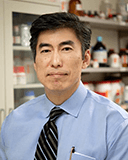 Joon Y. Lee, MD, professor in the Department of Orthopaedic Surgery, chief of the Division of Spinal Surgery, Orland Bethel Professor in Spine Surgery, clinical director of the Ferguson Laboratory for Orthopaedic and Spine Research, and executive director of the Bethel Musculoskeletal Research Center, leads the development and evolution of the biobank.
“Our goal for the first year was to collect about 200 patient samples totaling approximately 5,000 specimens. But we’ve exceeded those targets and are now working to expand our collections to additional subspecialties starting in the first half of 2026,” Dr. Lee says.
In June 2026, the BMRC Biobank launched a new website which includes a real-time inventory summary of available data and surgical collections as they proceed. Researchers can explore the biobank’s samples and data collection and also request specimen access through new electronic search and submission features.
As of June 11, 2026, the BMRC Biobank has enrolled more than 400 participants, collected more than 16,000 aliquots, and gathered electronic health record data on 192 participants, along with imaging data from more than 300 patients across multiple orthopaedic subspecialties.
“The new website provides investigators with real-time visibility into our inventory, along with a searchable interface that will allow them to identify available specimens and initiate collaboration requests,” Dr. Lee says. “As our volume increases, the way forward in managing this vast dataset is with automation to allow us to easily scale and maintain consistency in how the specimens are stored and retrieved.”
Specimen collections in the biobank currently include samples from spine surgery, joint reconstruction, foot and ankle, and hand surgery, with tissue acquisition occurring alongside routine operative care. Each collected specimen is linked to associated clinical and imaging data when it becomes available.
“What this allows is for the biobank to function as both a physical biobank and a structured dataset derived from real-world orthopaedic populations,” Dr. Lee says.
The next phase of the biobank’s development is focused on expanding specimen collection into additional patient populations with distinct biological characteristics. Data collected from UPMC Children’s Hospital of Pittsburgh will extend collection into younger patients, including those with rare genetic musculoskeletal conditions. The biobank also will begin collecting samples from sports medicine patients.
“Obtaining samples and clinical data from a younger and generally healthier population of sports medicine conditions, and data from more rare pediatric cases will allow us to deepen the range of biological variation housed in the biobank,” Dr. Lee says. “We’ll be gaining access to fundamentally different biological states.”
In parallel with expansion of the biobanks sample collections, Dr. Lee and colleagues are beginning work to generate structured molecular datasets from collected tissue. Some of the initially planned analyses include whole genome sequencing, along with proteomic and epigenomic characterization.
“The goal of the biobank is not just to store tissue, but to convert it into usable data. That includes genomic, proteomic, and other molecular analyses that allow us to link biology to what we are seeing clinically.” Dr. Lee says. “These layers of data will enable our biobank to be used for research beyond a single study or project.”
Even before formally starting outreach about collaborative efforts related to the biobank, Dr. Lee and colleagues have already garnered unsolicited interest from external collaborators to leverage the data the biobank has so far collected.
“We have not formally promoted the biobank yet, but we are already seeing interest from both industry and academic groups based on the types of specimens we are collecting,” Dr. Lee says. “That’s exactly what we want. We want to share this data with the field, start to collaborative efforts, and work to translate those efforts into better patient care.”
Ongoing support from the Bethel Family Foundation has enabled expansion of the biobank’s operational capacity. Funding has supported hiring additional personnel to expand specimen collection and upgrading storage infrastructure to accommodate increasing volume. Current storage relies on distributed freezer systems, with plans to transition to automated biorepository systems that incorporate robotic retrieval capabilities.
“As the biobank grows, managing samples across multiple locations becomes increasingly inefficient. The goal is to consolidate storage into automated systems that allow for standardized handling and rapid retrieval at scale,” Dr. Lee says. “There is a broader effort being led by Nam Tran, PhD, associate dean of biobanking at the University of Pittsburgh to better coordinate biobanking resources and we plugged into that. It’s a monumental effort but one that will pay huge dividends to the research community as it progresses.”
Learn more about the Bethel Musculoskeletal Research Center and the BMRC Biobank.
For specimen access, contract inquiries, feasibility questions, or media and philanthropic partnerships, email the BMRC Biobank team at biobank.bethel@pitt.edu.

