

Password Reset
Forgot your password? Enter the email address you used to create your account to initiate a password reset.


Forgot your password? Enter the email address you used to create your account to initiate a password reset.
7 Minutes
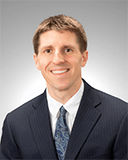 William Reed Doerfler, MD, MS, clinical assistant professor of medicine, Division of Endocrinology and Metabolism at the University of Pittsburgh School of Medicine is a member of the multidisciplinary thyroid program at UPMC. Dr. Doerfler earned his medical degree and subsequently completed residency, fellowship, and T32 postdoctoral fellowship all at the University of Pittsburgh. He joined the division as a faculty member immediately after completing his fellowship training.
Dr. Doerfler's clinical and research interests center on the use of molecular diagnostics to improve the evaluation and management of thyroid nodules and thyroid cancer, with a particular focus on integrating genomic profiling into clinical decision making.
Learn more about his work in our Q+A below.
Q: You see the full range of endocrine conditions. Where is your subspecialty focus?
A: I am a general endocrinologist, so I treat patients with diabetes, thyroid, adrenal, pituitary or reproductive hormone disorders. My focus is thyroid nodules and thyroid cancer. I am a member of the thyroid unit, and I perform fine needle aspiration biopsies every week.
Q: Approximately one-quarter to one-third of thyroid nodule biopsies are indeterminate. Why has molecular testing become so important for these patients?
A: For many years, an indeterminate biopsy often led to repeat biopsies and, ultimately, surgery simply to determine whether a nodule was cancer. Many patients underwent removal of half of the thyroid only to learn the nodule was benign.
Molecular testing has fundamentally changed that approach. Rather than relying only on what the cells look like under the microscope, we can now evaluate the tumor's genetic profile. That gives us much more information about the likelihood that a nodule is malignant and whether surgery is actually necessary.
Q: How does ThyroSeq® fit into that process?
A: ThyroSeq® was developed at UPMC by our molecular pathologists, Yuri Nikiforov, MD, PhD, and Marina Nikiforova, MD. It analyzes 112 thyroid cancer-related genes from a fine needle aspiration sample.
A positive result, depending on the specific mutation, can indicate that surgery is appropriate because the nodule is likely malignant. Equally important is the negative result. When ThyroSeq is negative, the likelihood that the nodule is cancer is less than 3%, which, for most patients, is comparable to having a benign biopsy. Many patients can safely avoid surgery and continued uncertainty.
Q: How has molecular testing changed the way thyroid cancer is treated?
A: Historically, many patients with thyroid cancer underwent total thyroidectomy followed by radioactive iodine treatment. Over time, we have learned that many patients were receiving more treatment than they actually needed.
Today, the goal is to match treatment to the biology of the tumor. Many thyroid cancers are relatively indolent and can be treated successfully with surgery alone. Some very small, low-risk cancers may even be appropriate for active surveillance, particularly in older patients or those with significant medical comorbidities. Rather than a one-size-fits-all approach, we can increasingly tailor treatment to the individual patient.
Q: Where does radiofrequency ablation fit into that evolution?
A: Radiofrequency ablation is another example of how thyroid care continues to become less invasive. It is an ultrasound-guided office procedure that we currently use for benign thyroid nodules causing compressive symptoms or cosmetic concerns, as well as for toxic adenomas.
Looking ahead, an important research question is whether carefully selected patients with small, low-risk thyroid cancers could eventually be treated with radiofrequency ablation instead of surgery. If clinical studies demonstrate comparable long-term outcomes, that approach could allow some patients to avoid an operation while preserving normal thyroid function.
Q: Your research began during your fellowship. What were you working on?
A: During my T32 fellowship, I worked in the thyroid group with Dr. Nikiforov, characterizing thyroid tumors at the molecular level. My most recent study looked at nodules carrying a RAS mutation. RAS is one of the most common mutations in thyroid cancer, but unlike BRAF V600, which is almost always papillary cancer, RAS shows up across the spectrum, from benign to pre-malignant to malignant.
A RAS result by itself does not tell you whether a nodule is cancer, and a good portion of RAS-positive nodules are benign. On its own, a RAS mutation usually points to a less aggressive tumor that we can treat by removing half the thyroid, without radioactive iodine. When RAS comes with another mutation, it is much more likely to be cancer, and we treat it accordingly. What we set out to define is which RAS-positive nodules can be managed conservatively.
Q: Where is the molecular work heading next?
A: One thing the group is working on is predicting which cancers will respond to radioactive iodine. Response varies quite a bit, and much of that comes down to the tumor's molecular profile. The idea is to turn that into a score we could add to the report clinicians already receive, so that if a tumor is unlikely to respond, we can say up front whether the treatment is worth its side effects. The test is not static. It has gone through several versions, and the work between the lab and the clinical data keeps improving what it can tell patients and providers.
Q: You are also associate program director of the fellowship. How did education become part of your work?
A: Medical education has mattered to me since my chief resident year, which was largely an administrative and teaching role. I carried that into my work as associate program director of the endocrinology fellowship, where I help recruit and train our fellows, and it is one of the most rewarding parts of the job. My own path into endocrinology came out of a teaching experience, a rotation on the endocrine consult service during medical school, so I know how much a good mentor during training can shape where someone ends up. I try to be that for our fellows.
Q: What projects would you like to work on in the future?
A: I would like to see radiofrequency ablation studied for thyroid cancer, ideally in a trial comparing it with standard surgery in carefully selected patients who have small, low-risk tumors. If we can show it works as well as surgery for those cancers, we can spare patients an operation and a lifetime on thyroid hormone replacement.
ThyroSeq® is a molecular test for thyroid nodules developed at UPMC and the University of Pittsburgh by molecular pathologists Yuri Nikiforov, MD, PhD, and Marina Nikiforova, MD. First used in patient care in 2007, it was created to reduce the number of diagnostic thyroid surgeries performed on nodules whose cancer risk could not be resolved by cytology alone. The test uses next-generation sequencing to evaluate 112 thyroid cancer-related genes from a fine needle aspiration sample, and it has been refined across several versions, with ThyroSeq v3 the current generation.

