

Password Reset
Forgot your password? Enter the email address you used to create your account to initiate a password reset.


Forgot your password? Enter the email address you used to create your account to initiate a password reset.
8 Minutes
Featured in the article are:
The UPMC Multidisciplinary Adrenal Program is investing in two areas that will shape adrenal care over the next several years: an expanding robotic adrenalectomy capability that sits within a broader range of surgical approaches, and a growing research program built around the clinical questions the team works through with its patients.
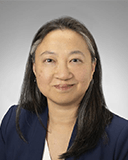 "The clinical work is the foundation, but it is not the whole picture," Dr. Yip says. "Where the field is going on adrenal disease, both surgically and medically, is being shaped by programs that are large enough to see the patterns and structured enough to study them. We have built our program with that in mind. The surgical capability and the research portfolio are connected, and both are part of what we are able to offer patients now and what we will be able to offer them in five years."
Adrenalectomy is performed minimally invasively in most cases at UPMC, and patients are typically discharged the day after surgery. The routine appearance of the procedure can obscure how technically demanding it actually is.
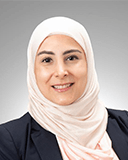 "We tell patients it is a straightforward operation, and from their experience of recovery it often is," Dr. Sada says. "The reality from the surgical side is different. The adrenal glands sit in the retroperitoneum next to the aorta and the inferior vena cava, the blood supply is rich, and the margin for error is narrow. A complication in this anatomy is not a minor event."
Patient factors compound the technical challenge. The adrenal glands are surrounded by retroperitoneal fat, and obesity, prior abdominal surgery, scarring, and other comorbidities can each increase the difficulty of an operation that is otherwise considered routine.
The program performs adrenalectomy through multiple approaches: laparoscopic transabdominal, posterior retroperitoneal, and robotic. The choice is made for each patient based on anatomy, prior surgical history, and whether one or both adrenal glands need to be addressed.
"At many high-volume adrenal centers, the surgical team is comfortable with one approach and uses that approach for nearly every case," Dr. Sada says. "We do not work that way here. The patient's anatomy and prior history should drive the choice of approach, not the surgeon's habit. A posterior retroperitoneal approach is the right answer for one patient, a robotic transabdominal approach is the right answer for the next, and the team should be capable of either."
The robotic adrenalectomy program is the area Dr. Sada is actively expanding. UPMC has been a high-volume robotic surgery center across multiple specialties for years, and adrenalectomy is one of the procedures where the platform's specific advantages are most useful in selected cases. The robotic platform offers three-dimensional visualization and a wider range of instrument articulation than laparoscopic instruments allow, which matters most in obese patients, in patients with prior abdominal surgery and scarring, and in operations involving fine dissection near major vessels.
The robotic approach is not the default for every case. Laparoscopic adrenalectomy continues to produce comparable patient outcomes and remains the right choice for many patients. The expansion of the robotic program is about adding capability for the cases where the platform offers a meaningful advantage, not about replacing approaches that already work.
"Maintaining capability across multiple surgical approaches is a programmatic decision, not a matter of individual surgeon preference," Dr. Yip says. "It takes more time, more training, and more case volume to build a team that can offer laparoscopic, posterior retroperitoneal, and robotic adrenalectomy than to standardize on one technique. We have made that investment because the patients we see are not all the same, and the right operation for one patient is not the right operation for the next."
The research program is built on the clinical questions the team encounters in its patients. Many of those questions surface first in the monthly case review conference, where complex or unresolved cases get discussed across the medical and surgical teams.
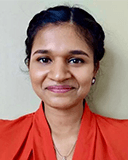 "The same questions come up in conference, in clinic, and in the cases we send back and forth between services," Dr. Mannivannan says. "Studying them in a structured way is how those questions stop being recurring debates and start becoming guidance for how we manage the next patient who walks in."
The pattern is consistent enough that the conference functions as an informal pipeline for research questions. A case that the team has trouble resolving, or a clinical observation that does not match what the existing literature predicts, often becomes the starting point for a structured study.
"When we keep seeing the same kind of patient and finding ourselves uncertain about the same decision, that is usually a sign there is something the field has not fully worked out yet," Dr. Mannivannan says. "Some of our published work started in conference discussions where we realized we did not have a clear answer to give the next patient who came in with that presentation."
 That observation has translated into an active research portfolio. Dr. Sistla and Dr. Sada have collaborated on outcomes research focused on patients with adrenal nodules and excess hormonal secretion. Recent published work includes a study of imaging in the diagnosis of various adrenal pathologies, as well as a study of adrenal insufficiency following adrenalectomy in patients with cortisol-producing tumors.
"The questions we are studying are the questions we cannot fully answer from the existing literature," Dr. Sistla says. "What happens to these patients after surgery, which patients benefit most, which ones can be observed safely. The answers shape how we counsel patients and how we manage them long-term."
Additional ongoing work is investigating metabolic outcomes in patients with cortisol-producing tumors, which is designed to identify which patients benefit most from surgery and which can be observed.
A clinical trial in development at the program will examine whether combining adrenalectomy with GLP-1 receptor agonist therapy improves long-term outcomes in patients with cortisol-producing adrenal tumors. Dr. Sada is the principal investigator. Dr. Sistla is the endocrinology co-investigator. This trial was recognized at the AAES 2026 Annual Meeting by receiving the Paul LoGerfo Research Award.
The clinical rationale draws on a known pattern. Adrenalectomy for cortisol-producing tumors generally improves the metabolic consequences of cortisol excess, including hypertension, hyperlipidemia, diabetes, and obesity. The magnitude of improvement varies substantially between patients, and the variation is the question the trial is designed to address.
"Some patients lose substantial weight after surgery, their diabetes resolves, and the metabolic picture transforms," Dr. Sada says. "Other patients see only modest improvement, because their metabolic disease is multifactorial and cortisol was one driver among several”. The question the trial is designed to answer is whether combining surgery with GLP-1 therapy produces better long-term outcomes than surgery alone, and what that tells us about how cortisol-driven these conditions actually are."
"The patients who do well after surgery and the patients who improve only modestly look similar before the operation in many ways," Dr. Sistla says. "Understanding why they diverge afterward is a clinical question the medical and surgical teams have been asking each other for a long time. The trial is one way of getting an answer."
Enrollment is currently open. For additional information about the trial, please visit: https://pittplusme.org/study/macs or https://clinicaltrials.gov/study/NCT07573163.
For more information or to schedule an appointment with endocrine surgery, please call 412-647-0467, 8 a.m. to 4:30 p.m., Monday through Friday, or visit our website.
For more information or to schedule an appointment with endocrinology, please call 412-586-9700, 8 a.m. to 4:30 pm, Monday through Friday, or visit our website.
For more information about our current clinical trial, please call 412-647-0467 or visit: https://pittplusme.org/study/macs.

