


Password Reset
Forgot your password? Enter the email address you used to create your account to initiate a password reset.


Forgot your password? Enter the email address you used to create your account to initiate a password reset.
12 Minutes
 Routine gynecologic care reaches women with disabilities less reliably than the general population. This disparity in care carries the risk of significant consequences to long-term health. The Center for Women with Disabilities at UPMC Magee-Womens Hospital has spent the last 25 years closing that gap for patients across western Pennsylvania and beyond. John A. Harris, MD, MSc, assistant professor, Department of Obstetrics, Gynecology and Reproductive Sciences at the University of Pittsburgh School of Medicine, has directed the Center since 2018.
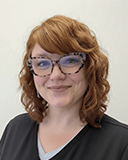 Jennifer Stephens, RN, is the Center’s nurse coordinator and educator. In the discussion that follows, the team speaks about what is at stake when this care is missed and what any clinician can do to make gynecologic care accessible.
Q: There are persistent gaps in the routine gynecologic care for women with disabilities. What are the clinical costs to patients when this happens?
A: Dr. Harris: The costs show up in survival. Women with disabilities are more likely to die of the same cancers the general population survives, and it is not because the cancer behaves differently. It is because the screening did not happen on time, so the disease is found at a later stage. For 2 to 4% of the population, the barriers to a routine pelvic exam are significant enough that the care simply does not happen when or how often is should, and that is where the consequences concentrate.
The pelvic exam is the most physically demanding routine exam we ask patients to undergo. You can listen to a heart or examine eyes with a patient seated, but there is no workaround for the reproductive exam if the patient cannot be positioned and the room was not built for it. When that exam is skipped year after year, you lose the early findings that change outcomes, and some of those missed findings are the difference between a treatable diagnosis and a fatal one.
Q: Where else do you see the health consequences of missed care, beyond cancer screening?
A: Ms. Stephens: The consequences extend well past anything we find on an exam. Many of our patients cannot get the mobility equipment they need, and that gap shortens lives. An ill-fitting wheelchair causes skin breakdown, this invites infection, and a patient who cannot move carries a higher risk of blood clots and pneumonia. In this population, staying mobile is not a quality-of-life question. It is a survival question. I think of one patient whose only mobility device was a wheelchair she had bought secondhand online, one that never fit her properly. Part of our role is to connect patients to resources they did not know existed.
Sitting inside a system with assistive-technology and mobility programs, I can address the gynecologic care in front of me and, in the same visit, connect the patient to resources for assistive equipment that fits and keeps her moving. For many of these patients, that second piece matters as much as anything we do in the exam room.
Q: Many of these patients sit at the intersection of several disadvantages at once. How does that shape the population you see?
A: Ms. Stephens: Disadvantage usually does not arrive one at a time in this population. People with disabilities are more likely to live at or below the poverty line, and many of our patients also belong to minority groups who face their own barriers to care. Those access problems can compound in the same person. One patient may struggle to reach us, to afford the equipment she needs, and carry a history of not being heard in medical settings, all at once. A population that is already underrepresented turns out to hold other underrepresented populations within it. That is why a missed appointment here is not just a missed appointment. It is one more barrier added to list of barriers.
Q: Are there assumptions in the broader medical community that keep women with disabilities from being offered this care in the first place?
A: Ms. Stephens: There are, and they deserve to be named. The first is the belief that a woman who is not sexually active, or who lives in a care facility, has no need for gynecologic care. The thinking goes that she is not at risk, so why would she come in. A great deal can still go wrong, and everyone deserves this care regardless of their circumstances. The deeper assumption concerns how much a disabled patient’s life is presumed to be worth.
Ask people to rate the quality of life of someone with a disability and they tend to score it low. Ask that same person to rate her own life and she ranks it far higher. That disconnect is one of the wrongs we are working to correct, because it quietly governs how seriously a patient’s health is taken. These are people, and the obligation is simply to do right by the person in front of you. For me, it is that clear.
Q: We tend to picture a fixed, lifelong condition when we talk about disability. Is that the right mental model for grasping the totality of the patient population you treat?
A: Dr. Harris: It is not, and the narrow picture is part of why practices assume this does not apply to them. Disability can be temporary or situational, and it can be lifelong. A patient recovering from a serious car or bicycle crash, a patient whose limb is healing before a prosthetic is fitted, someone left profoundly deconditioned by a long illness, each of them passes through a stretch where the ordinary exam does not work. Every practice already cares for these patients, whether or not it thinks of itself as serving people with disabilities.
If your office can accommodate a patient who is temporarily unable to transfer or position, you are most of the way to accommodating the patient whose disability is permanent. The skills are the same, and the mindset is the same. The only thing that changes is how long the patient needs various accommodations or adaptations in how clinical providers treat them.
Q: A provider has a patient with a spinal cord injury, multiple sclerosis, or autism on the schedule and feels unequipped for the visit. Where should they start?
A: Ms. Stephens: Start exactly where you would with any other patient. I have watched a patient come into a room and the staff react as though a giraffe had walked in, unsure what to do with the person in front of them. My approach is to step back and remember that this is a person. We greet her, introduce ourselves, take a careful history, and do every part of the visit that can be done that day, none of which requires special equipment. The hesitation is usually the first mistake. Handle the human part well, and the technical accommodations turn out to be far smaller than expected and easy to plan around. So much of this work is the willingness to slow down and treat the visit as an ordinary one.
Q: How do you earn the trust of a patient who comes in for the first time expecting to be dismissed or mishandled because it has happened to them before, maybe repeatedly?
A: Dr. Harris: Many of these patients do arrive to our clinic guarded, and for good reason. They have been dismissed, talked past, or physically mishandled in medical settings before, and they bring that history into the room. A number of women would also rather not see a male provider for this exam, which I understand completely.
My job in those moments is not to win anyone over quickly. It is to move slowly, explain each step before I take it, give the patient control over the pace, and let the visit itself prove that this time will be different. Trust is not assumed in this population. It is rebuilt one visit at a time. Once a patient has had a single experience of being treated with patience and dignity, a great deal opens up, and the care she had avoided for years becomes possible.
A: Ms. Stephens: I will add the part he will not say about himself. Women who tell us they never want a male provider for this exam end up asking for him by name, because of how he treats them. He is also hands-on in a way that is rare. He will help reposition a patient, help with a brief, do whatever the moment requires, and he never treats any of it as beneath him. For a patient who may have spent years being handled as an inconvenience, that changes everything.
Q: What does the Americans with Disabilities Act actually require of a general practice, and where is the line between an accommodation you can make and a referral?
A: Dr. Harris: A practice can be in violation of the Americans with Disabilities Act if it does not make reasonable accommodations, but reasonable does not mean reproducing what we have built here. The accommodations a typical office needs are usually modest. The most common situation is a patient who can transfer onto the table but cannot position the way you are used to. In that case, two staff members, a medical assistant and a nurse, can help get the patient into the position the exam requires.
We use specialized foot holders for patients with leg spasms or limited control of the lower extremities, and equipment like that is not expensive or complicated to keep on hand, especially if you only need it a few times a year. What you cannot do in your setting, you refer, but you should be making the reasonable effort first. The ADA sets a floor. Meeting the basic dignity of the patient sets the real standard above it.
Q: If you had to name the single change that does the most for these patients, what would it be?
A: Ms. Stephens: Time. The simplest and most effective thing an office can do is give these visits more of it. A 15-minute appointment becomes a 30-minute appointment. It is the same accommodation we already make for a patient who needs translation services, and for the same reason: the communication takes longer and should not be rushed. For a patient with autism or an intellectual disability, time is not a courtesy. It is the central accommodation. An unfamiliar clinical setting is uncomfortable for anyone and more so for these patients, and the unhurried pace is often what allows the visit to happen at all. Doubling a slot asks little of a practice and changes the entire encounter in a positive way.
Q: Providers often assume a clinic like yours runs on specialized, expensive equipment. What does it actually take?
A: Ms. Stephens: We are not a fancy operation. We work out of a regular exam room. One room is slightly larger so it can accommodate a patient lift, our tables are rated to a thousand pounds, and we use operating-room stirrups. That is most of it, and none of it is out of reach for the average practice. We did not build a glamorous space, and no one needs to recreate what we have assembled over 25 years in order to make care meaningfully more accessible. Stock a few pieces of equipment, set aside one room that can fit a lift, and commit the staff to the work. The physical accommodations are real, and some are necessary, but they are not the difficult part. The difficult part is deciding to do it.
Q: When a visit reaches something with a patient you genuinely cannot do in your setting at the moment, how do you keep the patient from feeling turned away?
A: Ms. Stephens: You do everything within your power first, before you ever raise what you cannot do. Many of our patients have traveled hours to reach us, so being sent home with nothing is its own kind of harm. I have been called into situations where a patient felt she had been turned away because of her mobility, and the guidance I give providers is straightforward. Show her that she matters by completing the interview, the history, and every part of the visit that is possible.
Then tell her you will arrange the remaining portion of the exam somewhere better suited to her, and that you will help coordinate it. She leaves with the information and resources she needs for the next step. The difference between turning a patient away and referring her well lies entirely in whether you did the part you could and took ownership of coordinating the part you could not.
Q: What would you say to a physician who reads this and wonders whether disability-focused care has a place in their own practice?
A: Dr. Harris: There is space for it anywhere. If you are in family medicine, neurology, or any other field, you can grow a disability focus into the practice you already have. Women’s health and disability is the combination people tend to think of last, which I do not believe is right, but even there, the space exists everywhere.
We would love this care to be excellent everywhere, not concentrated in a handful of specialty centers. A liver transplant should happen in a few places that do it extremely well. This is the opposite. As a matter of equity, every woman with a disability should be able to get good, accessible and routine gynecologic care as close to where she already receives care as possible.
We are not entirely comfortable being a center of excellence for something that ought to be universal, and the way that changes is one practice at a time deciding this work belongs to them, too.
To learn more about the Center for Women with Disabilities at UPMC Magee Womens Hospital, or to refer a patient, call 412-641-4455.

