

Password Reset
Forgot your password? Enter the email address you used to create your account to initiate a password reset.


Forgot your password? Enter the email address you used to create your account to initiate a password reset.
7 Minutes
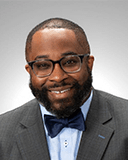 MaCalus V. Hogan, MD, MBA
David Silver Professor and Chair, Department of Orthopaedic Surgery
University of Pittsburgh School of Medicine
The most important work we do in orthopaedic surgery is training. I’m talking about our own institution, of course, but also of the field at large. Everything else, the clinical care, research, and program development matters, but they do not endure in the same way as training someone for a lifelong career in orthopaedic surgery. Operative techniques change, research changes, health care systems change and evolve, department chairs and leadership change.
However, how someone was trained endures. How someone was trained to navigate the inevitable changes in our field and in medicine endures. We get one shot at training a new orthopaedic surgeon – five or six years as a resident (and maybe a few more for fellows) to shape not only their technical mastery of the surgical discipline but also how they will be able to think, act, adapt, evolve, and pay it forward as surgeons, leaders, innovators, and teachers in a future health care environment we cannot predict. Just one shot.
For me and for our department, what that means in practice is we have to be very intentional about what we are putting out into the world through our trainees. Yes, they need to be technically excellent. That’s a given. They have to know how to operate, how to make decisions, how to manage complications, how to care for patients in a compassionate, human-centric manner. That’s the baseline. But if that’s all we are doing, then we are not really doing our job and we are not providing the best possible training environment in which new surgeons, leaders, and innovators are shaped because the environment they are going into will change. It already is. It changes every day. Orthopaedic surgery, and medicine in general, will look different five years from now, 10 years from now, certainly 20 years from now. So, the question I ask myself is: what are we actually giving trainees in terms of core principles that will hold up when everything around them shifts?
That’s not a new idea in our department. Albert Ferguson built the foundation of the department. James Herndon carried it forward and expanded it. Freddie Fu took it to a different level in terms of scale, reach, and influence. Different eras, different pressures, but a very consistent expectation. This is a place that trains people who go on to lead, build, and shape the future of orthopaedics wherever they end up, whatever their specialty, whatever their aspirations for a career in this field.
We see that in where people go after they leave our programs. Chairs, division chiefs, people running programs, building practices, leading health care systems, and creating the orthopaedic care of tomorrow. That has been true of our program for decades. People have their own way of describing it, but the underlying point is simple. The reach and the measure by which we judge our department has and always will be tied to our trainees.
When I think about this as a department leader, I’m not starting something new. I’m stepping into something that was built over a long period of time, very intentionally. The question I ask myself and of my colleagues is how do we honor that work yet carry it forward, make it our own, and continually make what we do in terms of training surgeons better? There are things that don’t want to change, like the expectation around being a high-quality orthopaedic surgeon. The depth of exposure our program offers to trainees. The repetition and high volume we are able bake into our training. The accountability to the patients who put their trust in our hands when something needs fixed. Those have been consistent threads in this department for more than 60 years now and they are not going anywhere anytime soon.
But the environment around all that has changed. What orthopaedic surgeons will have to navigate in the future is different, now, but that was the case, too, for my predecessors. We have to adjust the training environment without losing what made it work in the first place.
That’s where we are intentional. Academic center, level one trauma, community practice, research lab, outpatient clinic. We expect our trainees to be able to function in all of those. Not just see them or understand them, function in them and excel at the same time.
And then there is everything that sits around the work of surgery itself, not in abstraction, but as a part of how patient care is actually delivered every day. How decisions are made, how a system functions when something goes wrong, how outcomes are measured, how performance is evaluated, and how all of that feeds back into how you take care of the next patient — those are now fundamental parts of orthopaedic practice that did not always exist. Furthermore, they are not optional, and they are not things you generally learn in medical school, so they have to be a part of a surgeon’s training environment through deliberate and conscious inclusion.
In our case reviews and morbidity and mortality discussions, we do not stop at what happened in the operating room. We push further and ask how that case fits into a larger system and what it means for outcomes, for value, for how care is being delivered and assessed more broadly because wherever our trainees go, they will be working within those structures whether they recognize it or not.
The same applies to leadership, which is not something most people enter training thinking about, but something they begin to understand when they are in an environment where they can see how programs are built, how teams are led, how research questions are asked, what the fundamental business requirements of medicine actually entail, and how decisions around all of that are made beyond the level of an individual patient case.
That kind of exposure can change how a trainee thinks about what they can do in the field, where they can go, how their ideas and passions can translate into both deeply meaningful personal work but also at higher levels of authority and influence. We have seen that consistently in the trajectories of the people who have trained here. It is not something we leave to chance or to individual mentorship alone. It has to be present in the environment in a way that is visible and accessible for our learners, and that is where we have been more deliberate in how we structure opportunities in leadership, research, and community engagement so that trainees can meaningfully engage with those areas during training rather than encountering them for the first time after they leave.
And they do leave, which is the point of all of this. Our trainees go into academic centers, community practices, and health systems and take with them elements of how they were trained here, applying those core principles in different settings and building on them over time, adding their own marks of influence, their own innate abilities, and their own objectives. That is how our department extends its reach and influence beyond what we are doing locally and regionally. It is how we set up our trainees to do the very same on their own. It is ultimately how we think about our orthopaedic surgery department’s effectiveness and legacy in a practical sense, whether what we are putting into people during their training will hold up when they become the ones responsible for leading, teaching, and moving this field forward.
Learn More About the Department of Orthopaedic Surgery and Residency Program at the University of Pittsburgh School of Medicine.

