

Password Reset
Forgot your password? Enter the email address you used to create your account to initiate a password reset.


Forgot your password? Enter the email address you used to create your account to initiate a password reset.
8 Minutes
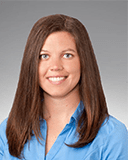 Gele Moloney, MD, knows the orthopaedic surgery residency at the University of Pittsburgh and UPMC from both sides of the training experience. She came to Pittsburgh as a resident, returned after fellowship to join the faculty, and now serves as chief of orthopaedic surgery at UPMC Mercy. In this Q&A, Dr. Moloney talks about what first drew her to Pittsburgh for training, how residency in the Department shaped her path to becoming an orthopaedic trauma specialist, what became clearer only after training, and how she now thinks about educating residents in her current role.
Q: What drew you to Pittsburgh for your orthopaedic surgery residency?
A: When I was applying, Pittsburgh was already one of the places people immediately associated with high caliber orthopaedics. At that time, “Pitt” and Freddie Fu, MD, were almost inseparable in the way people thought about it in the field. Meeting Dr. Fu during the interview process made a strong impression on me, and that absolutely mattered as I was deciding where I wanted to train. But just as important was the residency itself. I wanted broad exposure across orthopaedics and a setting where I could see the full range of subspecialty care rather than a limited slice of the field.
I also wanted real case complexity. If you do not encounter challenging problems during residency, you are unlikely to finish your training and suddenly know how to manage those things on your own. Residency is where the foundation is built.
Q: How did your residency experience shape your decision to pursue trauma?
A: I came into residency with an interest in trauma, as many medical students do. Trauma is often one of the first areas that draws people in because it is visible, technically demanding, and one of the first opportunities for hands on care of orthopaedic problems. But that early attraction is not the same thing as knowing you want to build a career there. What made the difference for me was the faculty and the mentorship during training. I was surrounded by people who were talented surgeons tackling the most complex problems. They were educators who made a point of explaining not only what they were doing, but why they were doing it. They challenged me to think critically about problems. That is what gave the field more substance for me. Over time, trauma evolved from an area of superficial interest to the subspeciality I wanted to practice and teach throughout my career
Q: What made the training environment at Pitt especially valuable to you as a resident?
A: The breadth of the program was a major part of it, but what stayed with me just as much was the ability to learn from multiple faculty within the same broad discipline. That gives residents more than procedural variety. It exposes them to different styles of judgment, different ways of approaching similar clinical problems, and different ways of thinking about surgery. That is extremely valuable during training because it helps residents develop their own clinical instincts while also showing them that there is often more than one thoughtful way to approach a problem. You are not being taught a single rigid script. You are learning how experienced surgeons reason.
Q: Looking back, what stayed with you most from your time in residency?
A: One of the clearest answers to that question came after I had already left. I went to fellowship and did not expect that I would return to Pittsburgh so quickly. Then an opportunity opened at UPMC Mercy, and once I seriously thought about it, the answer became fairly obvious. I already knew the Department. I knew the faculty were supportive and talented. I knew the clinical environment was strong, and I knew the case complexity was there. That made me step back and ask what exactly I would be looking for somewhere else that I had not already found in Pittsburgh. That realization made clear how much the program and the Department had shaped my sense of what a strong orthopaedic practice environment should look like.
Q: Why did returning to UPMC Mercy appeal to you at that stage of your career?
A: Part of the appeal was the chance to come back to a system I trusted, but part of it was also the specific opportunity. At the time, the practice there was still evolving. There had been change, and the structure was not fully settled. I understood that I would be entering a setting that was still developing, but I also knew I would be doing that with the support of a strong Department around me. That made the opportunity attractive. There was room to help build something over time, and that has been one of the more rewarding parts of my practice.
Q: Did residency prepare you for the nonoperative parts of a career in academic orthopaedics, including leadership and administration?
A: Not in the same direct way that training prepares you to operate or care for patients. Surgical training and patient care have always been the expected center of residency. After all, if the surgeons we are training can’t diagnose a rotator cuff tear, can’t perform a hip arthroplasty, or fix a fractured humerus, something is wrong. Leadership, hospital administration, and institutional dynamics were less explicit, but they were there. You could see those things happening around you. That has not changed.
But I think our Department has become more intentional about making those parts of medicine visible to residents earlier. But it is more than just visibility. It’s also about why those things matter and why they need to have an appreciation. That includes exposing them more directly to quality metrics, departmental review processes, and the kinds of system-level concerns that shape how departments, hospitals, and health care systems function. That is important because those forces affect practice whether physicians are prepared for them or not, whether they have leadership roles or not.
Q: How do you think about leadership in residency now that you are on faculty?
A: Leadership starts much earlier than many residents realize. Medicine is always team-based, which means residents are already leading in smaller but important ways even before they think of themselves that way. In the operating room, on service, and in daily interactions, they help establish tone, expectations, and accountability. That may not look like leadership in the formal administrative sense, but it is leadership. Chief residency becomes a more explicit and visible version of something that has already been developing over time. One of the lessons residents benefit from learning earlier is that leadership does not begin with a title. It begins with how you carry responsibility within a team.
Q: What does resident education look like in your current role at UPMC Mercy?
A: Resident education is a major part of what we do. At any given time, we usually have several residents at UPMC Mercy across different levels of training, and they work closely with us throughout the rotation. One of the useful features of that experience is continuity. Residents tend to work closely with one of two attendings over a sustained period, which lets them see much more than isolated operative cases. They begin to understand how a surgeon’s week is structured, how decisions carry over from clinic to the operating room to follow-up, and how a practice actually functions over time. That continuity allows for a more consistent mentorship model and gives residents a more complete view of clinical decision making and workflow.
Q: How has your own experience as a former resident shaped the way you now teach residents?
A: It has made me more aware of the importance of deliberate mentorship and clearer feedback. As a resident, you absorb a tremendous amount simply by being present in the environment, but as faculty, you realize how much more useful that experience becomes when expectations are explicit and teaching is intentional. I try to give residents both strong clinical exposure and enough continuity that they can understand why decisions are being made, how a service is run, and what it means to grow into responsibility over time. The goal is not only to show them what to do in a given case. It is to help them see how the many moving parts required to practice orthopaedics come together.
Q: What do residents gain by training with trauma faculty who bring different backgrounds and philosophies to the work?
A: They gain perspective, and that matters more than people sometimes realize. Across the trauma faculty, there are differences in training background, stage of career, and clinical style. Residents benefit from that because they are not being exposed to only one way of thinking. They see that thoughtful surgeons can approach similar problems somewhat differently, and that forces them to listen carefully, compare approaches, and develop their own critical thinking. That kind of diversity in teaching helps residents build judgment. It also prepares them for practice because they leave understanding that good orthopaedic surgery is not defined by imitation of one person’s methods alone.
Learn More About Dr. Moloney and the Orthopaedic Surgery Residency Program in the Department of Orthopaedic Surgery at the University of Pittsburgh School of Medicine.

