

Password Reset
Forgot your password? Enter the email address you used to create your account to initiate a password reset.


Forgot your password? Enter the email address you used to create your account to initiate a password reset.
11 Minutes
The orthopaedic surgery residency at the University of Pittsburgh Department of Orthopaedic Surgery and UPMC trains residents across every subspecialty in the field, from trauma, sports medicine, spine, and arthroplasty to hand, foot and ankle, pediatric orthopaedics, and musculoskeletal oncology. Volume in each subspecialty is high enough that residents see both the routine orthopaedic problems that fill a general practice and the complex cases that come into a major academic referral system.
The Department oversees three orthopaedic surgery residencies: the Pittsburgh program based at UPMC and the University of Pittsburgh, the program at UPMC Hamot in Erie, and the program in Central Pennsylvania. Each operates as its own residency with its own program director, faculty, and trainees, and each has its own institutional history and identity. They share resources where shared resources improve training, and residents from the Erie and Central Pennsylvania programs rotate into Pittsburgh for specific experience in subspecialties such as pediatric orthopaedics and trauma, where the volume and complexity in Pittsburgh round out their training.
This article focuses on the Pittsburgh residency program. The Erie and Central Pennsylvania residencies will be the subjects of separate articles in this series.
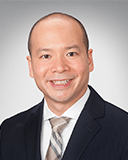 “There is no major orthopaedic specialty that is absent from our program, and none where we lack the expertise to care for patients at a high level, and train residents and fellows to do the same,” says Albert Lin, MD, professor of Orthopaedic Surgery; vice chair of Education; program director, Orthopaedic Surgery Residency Program; chief, Shoulder Service; codirector, Pittsburgh Shoulder Institute; associate chief, Division of Sports Medicine. “The goal is to expose residents to the full extent of our field, both clinically and in research, so they are prepared to care for general orthopaedic problems and also have the perspective to decide thoughtfully about what they want to specialize in later.”
Pediatric orthopaedics remains a required rotation for every resident, and musculoskeletal oncology adds a level of subspecialty exposure that many programs do not offer in equivalent depth. Residents do not have to plan around gaps in the subspecialty mix or build their education around what the program lacks.
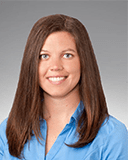 That breadth was one of the main reasons Gele Moloney, MD, associate professor of Orthopaedic Surgery; chief of Orthopaedics, UPMC Mercy, chose Pittsburgh for residency.
“I wanted broad exposure across orthopaedics, with the chance to see essentially any kind of case within any subspecialty,” Dr. Moloney says. “If you do not gain exposure to complex problems in training, you are unlikely to finish residency and succeed at tackling them on your own. Residency training is where the foundation for the rest of your career is built.”
The clinical setting reinforces that point. Residents see the routine orthopaedic problems that fill any practice, but they also encounter the more complicated cases that accumulate in a large tertiary referral system. The mix gives them experience across a wider range of pathology, treatment decisions, and operative strategies than a narrower program can provide.
Residents at Pitt carry a heavy clinical load from the start of intern year. They are in the operating room and on the floors early, working at the pace of a high-volume academic system, and they are expected to grow into that environment quickly. The educational coursework runs alongside the clinical work the entire time. It is not an afterthought.
“I think of our program as blue-collar in its work ethic, but with white-collar educational support,” Dr. Lin says. “Residents work extremely hard and are immersed in the clinical environment early, but they also have access to research opportunities and strong institutional support for their education.”
That support has specific components. The Department runs a structured didactic curriculum for all five or six years of residency, with regular lectures, case conferences, and academic sessions built into the schedule. Research access is open to every resident, and the program offers a dedicated six-year research track residency for individuals who want protected research time built into residency rather than in an ad hoc fashion. Funding is available for travel to courses and conferences, for board-preparation materials, and for the educational resources residents need at every stage. Many programs cannot offer that kind of financial backing, and the Department has made it a consistent priority.
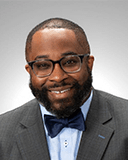 “The goal is to create the best possible environment for residents to learn and grow so they can pursue what matters most to them,” says MaCalus V. Hogan, MD, MBA, David Silver Professor and chair, Department of Orthopaedic Surgery. “The starting point is a solid, well-rounded orthopaedic surgeon who can adapt and continue evolving in different settings.”
Where graduates go varies. Some enter academic practice, some go into community practice, and others move into research or leadership roles. The program supports each of those paths rather than pushing residents toward any one of them.
Mentorship is one of the program’s defining features. Dr. Lin treats it as a pillar of the residency on the same level as clinical training, research, and the academic curriculum. Faculty serve as long-term teachers and advisors, and many remain part of a resident’s professional network well after training ends.
“Mentorship and networking is one of the most important parts of residency, having great teachers that become mentors and become friends,” Dr. Lin says. “That is a unique aspect of Pitt. We have always been a very family-oriented place that values this family atmosphere in how we interact with our residents, colleagues, and medical students.”
The Department faculty is large and varied enough to give residents exposure to multiple approaches within any given subspecialty. For Dr. Moloney, that variety was a deliberate consideration in choosing Pittsburgh for her training. She sees it as a defining strength of the program today.
“There is a lot of diversity of thought among the faculty,” Dr. Moloney says. “We have people with different training backgrounds, different philosophies, and at different points in their careers. That allows residents to see things from multiple perspectives, which helps with their education, their insights, and their critical thinking.”
The clinical implication of this is significant. Even in subspecialties where standard approaches are well established, residents see the same problem worked up, sequenced in the operating room, and managed postoperatively in different ways by different attendings. The comparative exposure builds the kind of judgment that single-mentor or smaller-faculty environments cannot replicate.
Operative training in the program follows an apprenticeship model, with responsibility built up in stages over the course of residency. Junior residents work primarily in the emergency department and on the floors, where they learn to triage musculoskeletal complaints and decide when surgery is and is not warranted. Mid-level residents move into operative participation and surgical planning. By the senior years, residents lead teams, teach junior residents, and operate with near-independent skill under faculty supervision.
How operative responsibility is shared between attending and resident inside this model is sometimes misunderstood.
“The idea that the resident is operating on you isn’t really accurate,” Dr. Lin says. “The cut could be made by the surgeon or the resident, but it is the same cut, and the decision to make it is the surgeon’s. The physical act of placing a screw or a plate may be the resident, but the surgeon is the one dictating where it goes.”
Faculty also adjust how they teach to fit the resident in front of them. Some residents need more reinforcement on technique. Some are ready for additional autonomy earlier than their peers. Some need extra reps in the lab before they are comfortable with a particular step in a procedure. The program builds around that variation in learning rather than against it.
Orthopaedic surgery residency at Pitt also brings residents into parts of practice that are outside the world of operative skill and day-to-day patient care. Quality metrics, departmental review processes, and the broader administrative environment of a large health system have all become more visible parts of training, and the Department has worked to make that exposure deliberate rather than incidental.
“Surgical training has always focused on patient care and operative skill, but leadership, understanding the basics of hospital administration, and the complexities of modern day medicine are something we place an increasing emphasis on,” Dr. Moloney says. “We are working hard to make those parts of practice more visible to residents because they really are essential skills.”
Leadership development starts before residents hold formal titles. Residents set the tone in the operating room, guide junior trainees, and carry responsibility within teams. The role expands during chief residency, when clinical work continues but the organizational side of training becomes more prominent.
“Physicians are always working within teams, so leadership starts early whether or not residents think of it that way,” Dr. Moloney says. “Sometimes that means leading the operating room team, setting expectations, and establishing tone. Those are skills residents have to develop while they are still in training.”
Training in the Department residency program involves work in both academic and community settings rather than limiting residents to a single institutional model. Practice changes with every setting. Patient populations, referral patterns, workflow, and resources all differ. Working across varying environments gives residents experience that holds up whether they end up in academic medicine, community practice, or somewhere in between.
“We want residents to train across the full range of orthopaedics and across different types of practice,” Dr. Hogan says. “That includes the academic core, a level 1 trauma center and tertiary referral environment, but also substantial experience in community settings, all built on high-throughput clinical exposure in both operative and nonoperative care, so they become well-rounded orthopaedic surgeons.”
Surgical proficiency does not lend itself to written examination. Faculty have to observe how a resident evaluates a patient, plans an operation, and carries it out across different cases, and the discussion that follows each case is where most of the actual teaching happens. That dynamic is part of why orthopaedic training has always depended on the apprenticeship model, and it is part of why feedback has become a more deliberate part of how the program operates.
The American Board of Orthopaedic Surgery recently began requiring residents to submit structured feedback to attending surgeons on individual cases. The Department also runs its own internal evaluation across rotations, with real-time discussion of resident progress and direct conversations about both the trainees who are excelling and those who are struggling.
When a resident needs more reps on a specific technique outside the operating room, the program supplements operative experience through cadaver labs, sawbones models, and partnerships with industry.
"We are currently investing in virtual reality for our residents," Dr. Lin says. "If a resident feels they need more work on a particular procedure, the goal is for them to be able to put a headset on and virtually do the surgery five or 10 times at their own convenience. There is also potential to use those modules as objective assessment tools, with measurable feedback on how efficiently a resident performs a given case."
Everything the Department does runs through five guiding ideas Dr. Hogan calls the 5 Rs, and the residency is the second of them. Respect for the past anchors the program in the decades of work that built the Department into what it is. Research keeps it tied to the questions shaping the field. Relationships, with patients, colleagues, and alumni, sustain it across generations. Reputation follows from those four rather than driving them. Residents and fellows are the through line, the education pillar that turns each of the others into something lasting, because the trainees coming out of Pittsburgh carry all of it with them into wherever and however they end up practicing during their careers.
The Department's reach is measured by where those trainees go after Pittsburgh and what they build once they get there.
"Residency is our legacy. The surgeons we train are the face, the history, the future of our program, and training them well is a responsibility we take seriously, because they are the ones who will be caring for patients long after they leave Pittsburgh. We take real pride in that," Dr. Lin says.
Learn more about the University of Pittsburgh Department of Orthopaedic Surgery Residency, Fellowships, and other training programs.

