

Password Reset
Forgot your password? Enter the email address you used to create your account to initiate a password reset.


Forgot your password? Enter the email address you used to create your account to initiate a password reset.
6 Minutes
 This content originally appeared in the UPMC Health Discovery Report, in partnership with University of Pittsburgh.
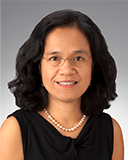
Flordeliza Villanueva, MD, serves as director of non-invasive cardiac imaging at the UPMC Heart and Vascular Institute and as associate program director for research for the UPMC Cardiovascular Fellowship Training Program. She also holds roles at the University of Pittsburgh, including professor of medicine and associate chief of cardiology for translational research in the Department of Medicine, director of the Center for Ultrasound Molecular Imaging and Therapeutics and director of the T32 Training Program in Imaging Sciences in Translational Cardiovascular Research.
Q: Can you share a bit about your early life and how you became interested in pursuing your particular research areas?
A: As faculty members at the University of the Philippines, my parents were involved in the research and development of local government institutions to strengthen the “barrios” or rural villages in the Philippines. This took on a global dimension when my father accepted a position at the United Nations. When I was 3 years old, my family moved to New York City. I recall meeting many of my father’s international colleagues and marveling at how a team of people coming from so many different backgrounds and experiences could all work together for a single purpose, united in the spirit of service to others. I think that backdrop stuck with me and influenced choices I’ve made in my life.
I was lucky to get a great education in the New York City public school system. In high school, I was drawn to the field of biology, and in particular, human physiology. I was attracted to the way we could explain how things work in human health and disease by understanding mechanisms by which the body operates. I decided that a career in medicine would allow me to combine my love of physiology with the commitment to work with others to make people’s lives better, which my parents instilled in me. I was admitted to the six-year combined BA/MD program at Boston University, where I completed my bachelor’s degree requirements in two years, then completed the traditional four years of medical school.
It was during my internal medicine residency at Duke University that I became interested in cardiology and cardiovascular research. I had always loved cardiovascular physiology above all other organ systems, and this was reinforced at Duke, which had a very busy clinical and research program in cardiology. I enjoyed taking care of cardiac patients and developed an interest in cardiovascular imaging.
Many of my attendings were giants in translational cardiovascular research, including Joe Greenfield, MD, who was a leader in preclinical physiology studies of myocardial blood flow, and Bob Lefkowitz, MD, a basic researcher who won a Nobel Prize. In these and other attending physicians, I had role models of physician-scientists who took care of patients while also pursuing clinically relevant, hypothesis-driven research in the lab — they convinced me that physician-scientists could make meaningful contributions to patient care, and that such a career was both satisfying and feasible.
I chose to pursue my imaging interests at the University of Virginia, where I did my cardiology clinical training, as well as my research training in the lab of Sanjiv Kaul, MD, an imaging scientist and echocardiographer who at the time was doing pre-clinical research in ultrasound contrast agents (also known as microbubbles) for the study of coronary microvascular blood flow. In his lab, I learned to think more critically, hone my hypotheses, and write papers and grants, among many other academic survival skills.
When I came to the University of Pittsburgh and UPMC after my fellowship, I started my own lab, focusing initially on the development of novel echocardiographic techniques for the study of coronary blood flow. This has expanded to the use of ultrasound in other applications, including therapeutic applications to cancer and neurodegenerative disease.
The activities in this research realm are now pursued in the Center for Ultrasound Molecular Imaging and Therapeutics, which I direct.
Q: Could you provide an overview of your current role(s) in cardiology?
A: I direct the Center for Ultrasound Molecular Imaging and Therapeutics, where I have the honor of working with multidisciplinary faculty developing novel ultrasound technologies for imaging and treatment. I feel strongly committed to training next-generation scientists, particularly physician-scientists, so I have several roles in this regard. First, I serve as associate chief of cardiology for translational research, where I liase with the University of Pittsburgh Department of Medicine for research initiatives and support our junior faculty physician-scientists in career development.
As associate program director for research for the UPMC Cardiology Fellowship Training Program, I oversee the fellows’ research projects, a requirement of the Accreditation Council for Graduate Medical Education. I’m the director of a T32 postdoctoral training program funded by the National Institutes of Health (NIH), which prepares postdocs to become translational cardiovascular researchers as they work in the labs of some of the best minds and mentors at Pitt. On the clinical side of things, I’m the director of cardiac imaging at UPMC Presbyterian. And of course, I still take care of patients through activities in my clinic, the inpatient setting, and the Echocardiography Laboratory.
Q: Can you tell us about your current research and its potential impact?
A: My current work is in image-guided therapeutics. I maintain my focus, as before, on ultrasound. From ultrasound imaging, my research veered into ultrasound therapeutics, where we leverage the unique bioeffects of intravenously injected microbubbles to facilitate delivery of cell-impermeant drugs.
We have discovered that microbubble cavitation behaviors transiently enhance endothelial barrier permeability, allowing drugs to be delivered more efficiently to areas where they are intended to go, like the heart, tumors, or the brain, while sparing delivery to non-target areas that are not in the ultrasound field.
We can load the microbubbles with drugs and target the drug delivery using ultrasound. For example, we’ve shown that we can increase the delivery of antibodies against amyloid protein to the brain in Alzheimer’s disease, and therapeutic RNAs to tumors or to the heart after myocardial infarction. This drug-delivery platform promises to provide spatially targeted treatments of otherwise toxic or cell-impermeant drugs specifically to diseased sites.
Q: Are there specific areas within your research field that you hope to explore further?
A: As with much preclinical research, the challenge is to translate our research into the clinical arena. We are pursuing research studies to understand the mechanisms by which our drug-delivery platform works. With a greater understanding of mechanisms, we can anticipate both the beneficial as well as potential adverse effects and hope that this knowledge will facilitate clinical translation.
Translating this work into patient care is the Holy Grail, as they say.
Q: Are there specific achievements you aspire to reach in your career?
A: I do hope that some of the technology we’ve been developing ultimately gets into clinical practice. I also hope that my efforts to train young scientists will contribute to the continuation of high-quality biomedical research, which is currently in a vulnerable state.

