

Password Reset
Forgot your password? Enter the email address you used to create your account to initiate a password reset.


Forgot your password? Enter the email address you used to create your account to initiate a password reset.
7 Minutes
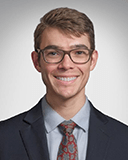 Ross Carson, MD, assistant professor of pediatrics, joined the Division of Child Neurology at UPMC Children’s Hospital of Pittsburgh in August 2025. Dr. Carson directs the division’s Epilepsy Genetics Program, Infantile Spasms Program, and Tuberous Sclerosis Complex (TSC) Clinic.
Dr. Carson earned his undergraduate degree in neuroscience at the University of Michigan and his medical degree at the University of Pittsburgh School of Medicine. He completed residency in child neurology and a fellowship in pediatric epilepsy at Boston Children’s Hospital.
Dr. Carson’s interest in neurology and the science of the brain began early, when a family member was diagnosed with a neurodevelopmental condition. That experience led him to study the developing brain as an undergraduate. In medical school, Dr. Carson considered several specialties before choosing child neurology as the one that brought his academic interests together, though at the time he did not know his career would focus on genetic epilepsies.
Pittsburgh was familiar to Dr. Carson before medical school. His parents are from the city, and although he did not grow up in the area, he spent holidays and weeks each summer there with family. In medical school, he met his future wife, a fellow University of Pittsburgh medical student.
“I met mentors at Pitt and UPMC during medical school whom I stayed close to after I left for training in Boston, and I loved the people at UPMC Children’s,” Dr. Carson says. “When it came time to look for faculty positions, my wife and I thought of Pittsburgh early in the decision-making process. We always knew it would be easy to come back if we had the opportunity because of our positive experiences during medical school.”
Residency and fellowship training at Boston Children’s gave Dr. Carson extensive exposure to complex forms of epilepsy and to neurogenetics. He spent as much time as he could with the neurogenetics division within neurology. Early in his training, a mentor in the group involved him in preparing Boston Children’s to serve as a site for a clinical trial of an antisense oligonucleotide therapy for Dravet syndrome. The RNA-targeting treatment is designed to increase production of the SCN1A protein, which patients with the disease do not make in sufficient amounts.
“Boston Children’s showed me a model for how a neurologist and epileptologist can do genetics work at a high level,” Dr. Carson says. “Working on that trial made me think about what a career in epilepsy genetics would look like. Much of the work is building a diagnostic pathway for children with severe early-onset epilepsies that don’t yet have an explanation and then asking whether a precision therapy could change how we care for them.”
The three programs Dr. Carson directs at UPMC Children’s deal with early-onset or genetic epilepsies, and they share much of the same patient population. Infantile spasms, a severe early-onset developmental and epileptic encephalopathy often has a genetic basis. The Infantile Spasms Program at UPMC Children’s is designed to provide evidence-based treatments and improve the time to genetic testing for these patients. One of the most common genetic causes of epilepsy is TSC, which results from variants in two related genes. Because these conditions overlap, Dr. Carson sees patients in all three clinics, and many patients move between them as their care changes over time.
Dr. Carson took over direction of the TSC program after the retirement of Shelly Williams, MD. He also works closely with Yoshimi Sogawa, MD, associate professor of pediatrics and the division’s director of clinical research, who previously directed the Infantile Spasms Clinic and cares for many of the same children.
The Epilepsy Genetics Program is part of the larger neurogenetics program at UPMC Children’s, and is directed by Deepa Rajan, MD. It is a multidisciplinary program that includes a genetic counselor and a medical genetics provider from the Division of Genetics and Genomic Medicine. Its goals are to establish new genetic diagnoses in children with unexplained epilepsy, provide pretest counseling, return results to families, and provide access to precision therapies and clinical trials.
Dr. Carson’s clinic sees the full range of genetic epilepsies, including SCN1A-related Dravet syndrome, SCN2A-related disorders, Rett syndrome, and Angelman syndrome. STXBP1-related disorders have become an especially active area.
“Genetic testing in epilepsy isn’t a simple blood test, and it doesn’t return a yes/no answer,” Dr. Carson says. “We get a large amount of information and have to decide what to do with it, and then we bring it back to families, often with implications for the child’s future. In some cases, the diagnosis guides treatment, either through a disease-specific therapy or because enough patients with that syndrome have been studied that we know which medications typically will work best. With more than 30 antiseizure medications available, knowing which of them work best for a syndrome or phenotype tells us where to go next.”
TSC is one of the best understood genetic epilepsies and one of the clearest examples of precision treatment. Vigabatrin is the gold standard for treatment of infantile spasms, as it produces high response rates in TSC, though the reasons are not fully understood. Everolimus (Afinitor®), an mTOR inhibitor with a long history in oncology, targets the excess growth signaling caused by the TSC genetic change. It can improve seizures, slow the growth of brain lesions, and help with renal manifestations.
For Dr. Carson, TSC also serves as a model for understanding other genetic epilepsies. The TSC genes are part of a much larger cell growth regulatory pathway, and what has been learned in TSC may extend to other epilepsies caused by genes in the same pathway.
“We stopped calling the medications we use anti-epilepsy drugs, because they treat the seizures and not the epilepsy, we now call them antiseizure medications,” Dr. Carson says. “Everolimus and the antisense oligonucleotide being studied in Dravet syndrome are closer to true antiepilepsy therapies. They act on the disease pathway. It may sound like semantics, but the distinction is increasingly meaningful to our patients, because the goal is to modify the disease, not just control or suppress symptoms.”
Dr. Carson is working to become involved in multicenter studies of disease course and treatment in specific genetic epilepsies. The TSC Program is currently the only disease-specific center for a genetic epilepsy at UPMC Children’s, and he hopes to help establish additional centers of excellence for other individual genetic epilepsies in the coming years.
On the education side, Dr. Carson’s work centers on how clinicians in the neurogenetics and epilepsy genetics clinics communicate with families. Colleagues in the epilepsy and genetics groups are studying the same question from the family’s side, looking at how patients and parents receive new genetic diagnoses and results that remain uncertain.
“How do we talk about the future when we find a variant of uncertain significance or know that a single gene can cause two different diseases with very different implications?” Dr. Carson asks. “The oncology genetics literature is rich on this kind of communication, and we’ve learned a lot from it, but epilepsy genetics is a different space with different implications and timelines. It has been a good model for what we’re setting out to do.”

