Password Reset
Forgot your password? Enter the email address you used to create your account to initiate a password reset.


Forgot your password? Enter the email address you used to create your account to initiate a password reset.
8 Minutes
The 2026 KUH Summer Undergraduate Research Symposium brought undergraduates from National Institute of Diabetes and Digestive and Kidney Diseases (NIDDK)-supported summer research programs across the country to the University of Pittsburgh for three days of scientific presentations, career discussions, and interaction with investigators and trainees working in kidney, urologic, and hematologic research.
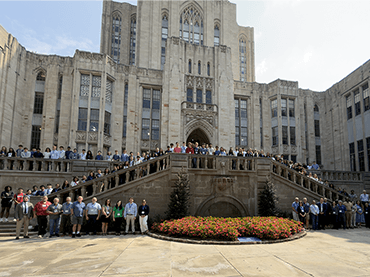
The University of Pittsburgh and the Division of Pediatric Nephrology in the Department of Pediatrics hosted the national symposium July 23 to 25, 2026 through SRIP-Kid, its NIDDK-funded, eight-week summer kidney research program for undergraduates. Rebecca Uhlean, a research technician in the Sims-Lucas Laboratory in the Division, served as lead planner for the event and coordinated the symposium’s development with May Hurtado, Fellowship Program Coordinator, Senior Administrative Assistant, and SRIP Administrator, alongside SRIP-Kid co-directors Sunder Sims-Lucas, PhD; Division Chief, Jacqueline Ho, MD, MS, and the broader Department of Pediatrics and University teams.
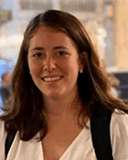
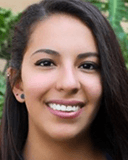
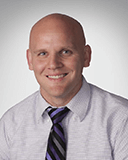
(Pictured from left to right: Rebecca Uhlean, May Hurtado, Sunder Sims-Lucas, PhD, Jacqueline Ho, MD, MS.)
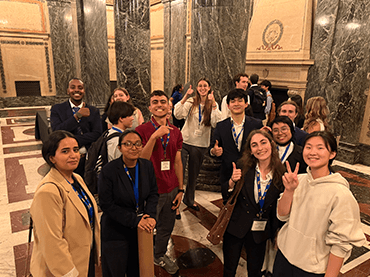
The KUH Undergraduate Research Symposium is the national capstone for undergraduate summer research experiences supported through NIDDK's R25 research education initiative. More than 140 undergraduate researchers from 17 institutions attended the symposium, along with more than 30 faculty members, program staff, NIDDK leaders, and invited speakers.
“This was a big event to coordinate, but we exceeded our expectations in the number of attendees that were able to travel to Pittsburgh for the symposium,” Ms. Uhlean says. “More importantly, I think the undergrads exceeded everyone’s expectations in the quality of the work they presented, their enthusiasm for the event, and how engaged they were in learning from each other.”
Students conduct mentored research at their home R25 institutions during the summer. At the symposium, they present that work to people outside their own laboratories, answer questions about their methods and findings, learn about research underway at other institutions, and speak with people at successive stages of scientific and medical training.
“Giving students opportunities to present their work, ask questions, and meet peers and near-peers to talk about life and science is important for showing them what a career in research can be like,” Dr. Ho says.
NIDDK program directors Anna Sadusky, PhD, and Christine Maric-Bilkan, PhD, opened the symposium. Griffin P. Rodgers, MD, MACP, director of NIDDK, then addressed the students. Their participation connected the projects presented by the students with NIH’s broader investment in developing the next generation of investigators in kidney, urologic, and hematologic research.
“Having buy in from the NIH and more specifically the NIDDK was a huge boost for the symposium. Dr. Rodgers, as the director of the NIDDK, really connected the students with the research mission and importance of fostering the next generation of researchers in this field,” Dr. Sims-Lucas says.
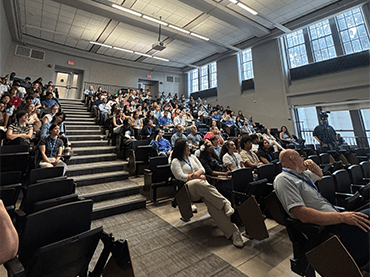
The four keynote speakers approached scientific careers from different directions. Susan Quaggin, MD, chair, Department of Medicine, Northwestern University, used her lecture, "Potassium, Podocytes and Piezo's: The Unexpected Twists & Turns of a Physician-Scientist's Journey," to examine both the science and the experiences that shaped her career.
“Dr. Quaggin told a very compelling story about how her father-in-law, a physician who lived through the previous polio epidemics and rise of vaccines, influenced her own career journey,” Dr. Ho says. “It was the perfect kind of inspirational story for young students to visualize how a career can unfold.”
Terence Dermody, MD, chair, Department of Pediatrics, University of Pittsburgh, presented "The Beauty of Serendipity," linking serendipity in scientific discoveries with chance encounters that can have outsized influences on careers. Simon Watkins, PhD, FRCPath, founder and director, Center for Biologic Imaging, University of Pittsburgh, introduced students to the scientific possibilities created by advances in microscopy and imaging in "Imaging Really Big Things Really Well and Really Fast: Kidney Remix." Mohammed Alexanderani, MD, assistant professor, pathology, University of Pittsburgh, discussed artificial intelligence in precision medicine.
“The students were engaged and asked questions during all of the plenary presentations,” Dr. Ho says. “I particularly enjoyed the science in Dr. Watkins’ presentation on microscopy and imaging. He presented it at a level that worked very well for an undergraduate audience.”
Alongside the scientific presentations, the symposium devoted substantial time to career planning. For undergraduates considering whether and how to continue in research, the program made the range of possible routes visible and gave them direct access to people who could speak about those routes from experience. It approached those conversations from two vantage points.
In one series of small-group discussions, faculty members, program directors, physician-scientists, industry investigators, and journal editors spoke with students about graduate and medical school, physician-scientist training, industry and entrepreneurship, and scientific writing and publishing.
A second series put the undergraduates in conversation with graduate and medical students, postdoctoral researchers, clinical fellows, and a resident physician. These near-peers were living through the choices and transitions the undergraduates may soon encounter themselves, giving students the opportunity to ask candid questions about entering advanced training, choosing a research direction, and balancing scientific and clinical responsibilities.
“The small group ‘speed dating’ sessions that were conducted by leaders locally here at the University and from individuals across the country showed the broad array of career options and trajectories. This is particularly pertinent to junior researchers as they navigate the challenging landscape of future career paths,” Dr. Sims-Lucas says.
Every undergraduate attending the symposium presented a research project. More than 70 poster boards filled the balcony above the reception space at the Carnegie Museums of Art and Natural History. The session ran in two rounds so that students could present their own work and spend time interacting with other students and their research projects.
For many of the students, it was their first formal poster presentation. The room nevertheless moved quickly into active scientific discussion, with students explaining their work to faculty members and to each other.
"When I walked through the poster sessions, conversations were happening. It was pretty lively," Ms. Uhlean says. "The students were engaged and excited to talk. I think it was a very good first conference and formal research presentation experience for many of them."
The symposium also built less formal interaction into the program. During the opening reception, each student received an activity passport with 15 prompts. The activities included playing a yard game, connecting on LinkedIn with someone from another institution, and starting conversations with other attendees about specified topics. Students who completed 10 prompts could enter a raffle for a symposium mug. The passport gave them an immediate reason to introduce themselves and begin conversations that might otherwise have been difficult to initiate at the start of a national meeting.
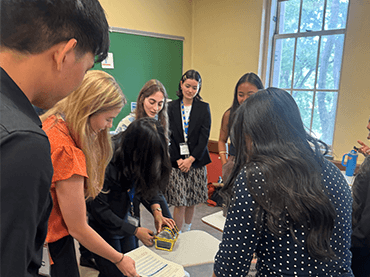
“Escape the Kidney” added a team-based scientific challenge later in the symposium. Students were broken up into 10 teams stationed in separate classrooms. Every team received the same packet of kidney-related questions and searched the classroom for clues. Correct answers produced combinations for padlocks securing a series of three boxes, with each opened box revealing the next stage of the activity. The first team to complete all three stages and text the word “kidney” to the organizers received a prize. Dr. Sims-Lucas proposed the team-building concept, and Ms. Uhlean designed and assembled the activity.
A group of undergraduates from Hawaii attending through the University of Utah program also asked to share a traditional song about gratitude, entering a new place, and maintaining a connection to one's roots.
“This wasn’t a planned part of our agenda, but the passion of the students and the sentiments expressed in their song highlighted perfectly why everyone was at the symposium in the first place – to connect with one another, learn from one another, and inspire one another,” Ms. Uhlean says.
At the opening reception, activity-passport prompts helped students begin conversations with people they had never met. By the end of the symposium, those prompts were no longer necessary. Students who had arrived as members of 17 separate summer programs had spent three days presenting research, questioning investigators, working through team challenges, and talking with peers considering many of the same decisions about science and training. As the symposium concluded, several students sought out the organizers to tell them what the experience had meant to them.
“The moment that made this feel the most worthwhile was when students came up to us spontaneously to thank us for organizing the symposium,” Dr. Ho says. “The excitement and gratitude blew us away.”