


Password Reset
Forgot your password? Enter the email address you used to create your account to initiate a password reset.


Forgot your password? Enter the email address you used to create your account to initiate a password reset.
8 Minutes
In 1975, the Child Neurology Residency Program at UPMC Children’s Hospital of Pittsburgh welcomed its first resident. More than 50 years later, the program trains four residents each year and has more than 110 graduates who have gone on to careers across the United States and around the world.
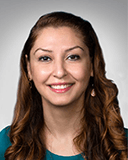 When Ruba Al-Ramadhani, MD, assistant professor, pediatrics, Division of Neurology and Child Development, University of Pittsburgh School of Medicine and program director, Child Neurology Residency Program, talks with prospective residents, that history is part of the program they are considering. Her conversations, however, focus primarily on the five years immediately ahead of them: the clinical experiences they will have, how much they will be able to shape their training, the mentorship available to help them build toward a career, and the people with whom they will spend those years of intense training and clinical experiences.
“Every program is going to teach you to become a child neurologist. The clinical training is largely the same wherever you go because of the national standards that exist, which is a good thing,” Dr. Al-Ramadhani says. “What matters is the environment you are choosing to spend five years in and the people you will spend them with. Those people become a second family during residency, and you want to choose a place where you can thrive.”
The clinical foundation at UPMC Children’s begins with volume and breadth. Over five years, residents encounter the neurologic disorders they will manage routinely throughout their careers along with rare diseases, unusual presentations, and complex referrals. Training spans inpatient and outpatient settings and multiple clinical sites, giving residents repeated exposure to common conditions while also requiring them to work through cases that may be encountered only occasionally in future practice.
“This is a high-volume program, so over five years residents see the full spectrum,” Dr. Al-Ramadhani says. “They manage the bread-and-butter conditions they will treat throughout their careers, and they also encounter the zebras — the rare presentations many trainees only read about. The goal is to prepare someone who can approach a case in the future even if they have never encountered that exact situation before.”
That broad clinical experience also provides the base from which residents can begin developing more specialized interests. By graduation, residents have had extensive general child neurology exposure while also having time within the program to pursue particular clinical, academic, or research directions in greater depth.
A substantial portion of the child neurology training is elective. A full half of one’s residency can be shaped around the individual resident’s interests and anticipated career direction. The time can be used for research, additional experience within a subspecialty, development of a specific clinical skill, or preparation for fellowship. When an experience is not available within UPMC, the program also allows residents to pursue appropriate away rotations at other institutions.
“One resident might devote elective time to research. Another might focus on a particular clinical skill or certification they know they will need for a future position,” Dr. Al-Ramadhani says. “If a resident already knows the fellowship they want to pursue, they can begin building toward it years in advance. The training should help them get where they want to go.”
Residents also have a role in shaping the core program. Each year, chief residents review the organization of the required rotations and recommend changes based on the experiences and needs of the current resident group. The underlying clinical requirements remain consistent, while the way residents move through portions of the curriculum can evolve from one class to the next.
The program’s approach is grounded in the belief that no two residents have identical career goals, learning styles, or professional aspirations. Rather than following a one-size-fits-all model, faculty work closely with each resident to develop an individualized learning plan that evolves throughout training. Through flexible elective opportunities, supportive longitudinal mentorship, and regular career-planning discussions, residents are encouraged to explore their interests, build on their strengths, and pursue opportunities aligned with their personal and professional goals.
“Every resident comes to us with different goals and aspirations,” Dr. Al-Ramadhani says. “Our responsibility is not only to provide excellent clinical training, but also to help each resident build a pathway that reflects who they are and what they hope to achieve. Our culture is defined by supportive mentorship and individualized learning plans that help every resident thrive.”
Every child neurology resident begins the program with a faculty mentor, but the program does not assume that one mentoring relationship will address every need that develops across five years. Additional mentors are added as a resident’s interests and plans become clearer. A resident pursuing research can be paired with an investigator in that area. Someone preparing for a particular clinical subspecialty can work with faculty familiar with its fellowship pathway and career options.
The guidance can extend into the transition out of residency, including fellowship applications, job searches, and contract discussions.
“If someone’s interests change, or the original mentor does not work in the area the resident decides to pursue, we find somebody who is a better fit for that part of their development,” Dr. Al-Ramadhani says. “The person advising a resident should be someone in a real position to help that resident get where they want to go in their career.”
The size and structure of the program also influence the resident experience outside the formal curriculum. The residency program is large enough to support scheduling flexibility and individualized educational opportunities while remaining small enough for residents to know one another closely. Residents spend time together outside the hospital and support one another when clinical training intersects with illness, family needs, and other unexpected circumstances.
“If somebody is sick or has an emergency, many times I do not even hear about it until later,” Dr. Al-Ramadhani says. “The residents work out the coverage among themselves and take care of one another. Five years is a significant part of your life, and you need to be able to rely on the people around you.”
Maintaining that culture has remained a priority as the residency has grown. It is an important part of recruitment because the relationships residents establish during training frequently extend beyond graduation as friendships, professional connections, and sources of support throughout their careers.
The experience of residency is also shaped by where those five years are spent. Pittsburgh combines a comparatively affordable cost of living with distinct neighborhoods, cultural and recreational opportunities, and a quality of life that allows residents to build a life outside of clinical training.
The city also places residents within the much larger UPMC and University of Pittsburgh academic medical community. The breadth of clinical programs, medical and scientific expertise, and research taking place across the institutions creates a professional environment that reaches well beyond child neurology and the formal requirements of the residency.
“Pittsburgh offers a lot both personally and professionally, and I think that is something people do not always appreciate until they are here,” Dr. Al-Ramadhani says. “There is an incredible amount happening across UPMC and the University of Pittsburgh, across specialties and areas of research. At the same time, it is a very livable city. Our residents can find neighborhoods and communities they enjoy, have lives outside of the hospital, and take advantage of everything that is here.”
The goal of the Child Neurology Residency Program is for residents to leave Pittsburgh prepared for the careers they want to pursue, with the clinical breadth to practice independently, experience tailored to their individual interests, and relationships with faculty and fellow residents that continue well beyond training. Where graduates take that foundation next may differ considerably, be it into subspecialty practice, research, academic medicine, education, leadership, or other areas of child neurology.
The program also measures its own success over a much longer period. The careers its trainees build, the patients they care for, the programs and research they develop, and the physicians they go on to teach become the enduring product of the residency. That legacy is sustained by a culture of supportive mentorship, individualized learning, and commitment to helping each resident succeed.
“People come and go, and faculty come and go, but the training stays with you throughout your career,” Dr. Al-Ramadhani says. “Our residents go on to do many different things, and their success after they leave is how we judge the success of the program. They are our legacy. That is what will still be standing 50 years from now.”

