

Password Reset
Forgot your password? Enter the email address you used to create your account to initiate a password reset.


Forgot your password? Enter the email address you used to create your account to initiate a password reset.
14 Minutes
In 2016, UPMC Children’s Hospital of Pittsburgh began extending its pediatric liver transplant program’s decades of clinical expertise and exceptional outcomes beyond Pittsburgh through a clinical partnership with UVA Health Children’s in Charlottesville, Va. UPMC transplant surgeons, physicians, nurses, and other specialists joined the UVA team in the management of pediatric transplant patients and performed liver transplant surgeries with their UVA colleagues in Charlottesville. The objective was to give children in Virginia access to the pediatric transplant expertise developed in Pittsburgh without requiring them to leave the region for their care.
The network expanded to AdventHealth for Children in Orlando, Fla., in 2018 and to Atrium Health Levine Children’s Hospital in Charlotte, North Carolina, in 2024. In each partnership, UPMC Children’s clinicians work as part of the local program rather than as consultants at a distant referral center, and the four sites operate as a single pediatric liver transplant program.
 “We built the regional network on a simple premise: a child should not have to come to Pittsburgh to receive the care and the outcomes our program provides,” George Mazariegos, MD, chief of Pediatric Transplantation at UPMC Children’s, says. “Our surgeons and teams operate and care for the children along with the team at each partner site, and each site offers the same standard of care. That only works if the partnership is built around the patient rather than around which institution the patient belongs to. Rarely, when a child needs something that only our hospital in Pittsburgh can provide, the relationship is already in place to make that happen. A geographic move just continues the child’s care in another building instead of it starting over.”
The pediatric liver transplant program at UPMC Children’s dates to 1981, when Thomas E. Starzl, MD, PhD, who had performed the world’s first liver transplant at the University of Colorado, brought his liver transplant program to Pittsburgh. That year, UPMC Children’s opened the country’s first comprehensive pediatric transplant center, now called the Hillman Center for Pediatric Transplantation. Dr. Starzl's work in Pittsburgh, including his team's introduction in 1989 of the immunosuppressant tacrolimus, which controlled rejection more effectively than the drugs available before it, made transplantation a viable treatment for diseases that had been considered incurable.
In the decades since, the program has performed more pediatric liver transplants than any other center in the United States, and more pediatric living donor liver transplants than any other pediatric transplant center in the country. It also draws patients from a wide geography, essentially the entire United States.
The pediatric liver transplant network was created in response to a pattern in national outcomes data. Survival after pediatric liver transplantation varies among centers in the United States, and it is closely tied to how many transplants a center performs.
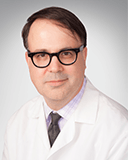 “Survival after pediatric liver transplant is not equal across the United States, and center volume is one of the clearest reasons,” says Kyle Soltys, MD, associate professor of surgery and transplant surgeon at UPMC Children’s. “About 70 centers perform pediatric liver transplants in the United States, and most of them perform five or fewer a year. UNOS data have shown a statistically significant difference at that threshold. That quality gap is one of the primary reasons we chose to create an integrated network of sites that function as a single program.”
Center volume is not the only factor that determines if a child in need of a liver transplant survives. Care for children who are evaluated and placed on the waitlist also influences overall outcomes. Listing establishes a child's eligibility for a liver transplant, but it does not determine how soon a suitable graft will become available, and the risk of waiting affects the youngest patients the most. Children younger than 1 year have the highest waitlist mortality of any age group, children or adults. Their small size limits the supply of appropriately sized whole-organ grafts and how long a child can wait for an organ that is a precise match.
“Infants on the waitlist are at high risk partly because of how sick they are, but their outcomes also depend on what the transplant center does on their behalf,” Dr. Mazariegos says. “Centers that perform split and living donor transplants, use machine perfusion, and pursue every available option to bring a listed child to transplant can keep waitlist mortality low even among the highest-risk patients. Not every center can use all of those tools, and referring physicians should weigh that when they decide where to send a child.”
How individual transplant centers respond to this dynamic varies. In a 2023 Liver Transplantation study conducted by Dr. Mazariegos and colleagues titled, “Center Use of Technical Variant Grafts Varies Widely and Impacts Pediatric Liver Transplant Waitlist and Recipient Outcomes in the United States,” the research team analyzed Organ Procurement and Transplantation Network data from 64 centers that performed 7,842 pediatric liver transplants between 2004 and 2020. Across those centers, waitlist mortality varied from 0% to 31%. The use of technical variant grafts also varied, from 0% to 76%.
Technical variant grafts include living donor grafts and split or partial grafts from deceased donors. Both approaches allow the transplant of a portion of a liver instead of waiting for a whole deceased donor organ that is a good match. In the study, increased use of technical variant grafts correlated with lower waitlist mortality. Living donor recipients also had better post-transplant survival than recipients of other graft types. Recipients of deceased donor technical variant grafts had outcomes statistically similar to recipients of whole deceased donor grafts.
“With a critically ill infant, no one can predict the clinical course with certainty, which makes it very difficult to wait with confidence for a suitable organ,” Dr. Mazariegos says.
“Placing a child on the list is the beginning of the work, not the end of it. The entire center has to recognize that the child is in a high-risk situation and act with the urgency that situation demands.”
Before UPMC Children's established the regional pediatric liver transplant network in 2016, a child in another state who needed the expertise of the pediatric liver transplant program at UPMC Children's had to travel to Pittsburgh for transplantation and much of the care surrounding it. That approach was becoming increasingly difficult to sustain, and the outcome data pushed the team to change the paradigm. and create a third option: taking its expertise to the children. Under this model, the program's transplant surgeons and clinicians perform transplants together with the local transplant team at a partner hospital, in a region where children need pediatric liver transplantation, but where existing programs have overall little experience in pediatric liver transplant.
“The idea began with a family who asked why we couldn’t come to their hospital, perform the transplant there, and let them go home,” Dr. Soltys says. “My first reaction was that it wasn’t realistic. But we were also finding it increasingly difficult to bring children to Pittsburgh from other states, and the outcome data told us where the need was greatest. We looked for regions that performed few pediatric liver transplants but had a large population of children with liver disease and a large number of pediatric donors. Virginia stood out immediately. The UVA program was performing a few transplants a year, and we offered to initiate our program with them. From the beginning, the goal was for a child having a transplant in Virginia to have the same experience as a child having a transplant in Pittsburgh.”
Combining the four sites has also changed the scale of the program, which has direct bearing on the relationship between a transplant programs volume and patient survival.
“The partnerships have essentially doubled the volume of our program,” Dr. Soltys says. “During the last three years, our combined programs have performed 137 pediatric liver transplants, which is almost one and a half times as many as the next busiest pediatric liver transplant center in the country.”
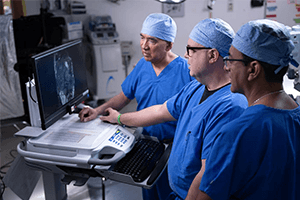
The pediatric liver transplant network operates as a single program across its sites, with the transplant team from UPMC Children's directing liver transplantation at each one. Every transplant at a partner site is performed jointly by UPMC Children's clinicians and the local transplant team, and the makeup of the traveling UPMC Children's team changes as the local team at each site gains experience. When a partnership begins, UPMC Children's sends transplant surgeons, anesthesiologists, intensive care physicians, and intensive care and floor nurses for each transplant, and they care for the child as a group with their local counterparts. Over time, fewer UPMC Children's clinicians need to travel. At UVA Health Children's in Charlottesville and AdventHealth for Children in Orlando, only the transplant surgeons now travel for each case. At Atrium Health Levine Children's in Charlotte, the newest site, a broader UPMC Children's team still participates. The dedication of our nurses, anesthesiologists and intensivists has been paramount to the success of these programs. In every case, the UPMC Children's surgeon who performs the transplant remains responsible for the child after the operation.
“The worst outcome after a complex operation is a complication managed by someone without the experience to handle it,” Dr. Soltys says. “For that reason, the operating surgeon remains at the partner site through the early recovery period rather than leaving when the case is finished. As we work so closely with the local team, we are able to diagnose and develop management plans for any complications that may develop. If that plan requires our hands-on management, we go back to work directly with the local team to hopefully achieve a good outcome.”
The four sites work as one team throughout each child's care, not only at the time of transplant. UPMC Children's clinicians help manage every child in the network, from referral and listing through the transplant and follow-up care afterward.
“The partnerships depend on constant communication,” Dr. Soltys says. “Every week, we review each patient in the network together, including each child on the waitlist, each new referral, and each transplant recipient with new laboratory results. Every day, we round virtually with the partner teams on every hospitalized patient. We have had at least one transplant patient in house in Orlando continuously for three years, which means we have rounded with that team every day for three years. It requires a great deal of work, but it becomes easier as the local teams gain experience. The model has worked very well.”
Living donor liver transplantation is central to the pediatric liver transplant program at UPMC Children's, which has performed more pediatric living donor liver transplants than any other pediatric transplant center in the United States. For an infant or young child, a living donor graft offers a route to transplant that does not depend on a size-matched deceased donor liver becoming available. Within the network, living donor transplants are performed at the Pittsburgh, Charlottesville, and Orlando sites. Living donor transplantation is not yet performed at the Charlotte site, so children cared for there who desire living donor evaluations can come to Pittsburgh and receive living donor transplants at UPMC Children's.
"At the Charlottesville and Orlando sites, we perform living donor transplants on site," Dr. Soltys says. "UPMC Children’s surgeons perform the recipient operation, and the local surgical team performs the donor operation. We expect to begin living donation in Charlotte within the next couple of years, and children there will then be able to receive that care close to home."
The pediatric liver transplant program at UPMC Children's is the referral center for complex pediatric liver disease and liver transplantation for most of the northern and central United States. Children are referred to the program from hospitals throughout New York, West Virginia, Ohio, and most of Pennsylvania.
"What distinguishes the program is not any single operation," Dr. Soltys says. "It is how closely our teams work with referring hospitals to manage children with complex liver disease before they ever arrive. Our transplant surgeons and hepatologists have close working relationships with these hospitals, so we are contacted early, and our intensive care, hepatology, and transplant teams can help stabilize a child while the child is still at the referring hospital."
For a child who is already listed at a center that does not perform living donor liver transplantation, a second listing at UPMC Children's adds a living donor pathway and a second route to a deceased donor graft. Few pediatric transplant centers in the country accept these referrals. The pediatric liver transplant program at UPMC Children's accepts them from any transplant program.
"Under UNOS policy, patients should be informed that they can be listed at more than one transplant center and listing at a second center should not disadvantage them at the first," Dr. Mazariegos says. "That is a patient's right in the United States. We support it, and the process should be collaborative and transparent between the centers involved."
Dr. Mazariegos founded the Starzl Network for Excellence in Pediatric Transplantation in 2018 and continues to lead it. The network includes 24 pediatric transplant centers in the United States, along with international members in Canada and Japan. Starzl Network member centers perform approximately 70% of all pediatric liver transplants in the United States.
The Starzl Network operates as a learning health system. Member centers contribute to a shared data platform, compare their practices and outcomes, and use those comparisons to identify gaps in outcomes and the approaches that can close those gaps. Working groups focus on immunosuppression, surgical complications, patient-reported outcomes, and transition of care, while patients and families participate as partners in the network by helping to set the network’s priorities.
In 2023, the Starzl Network's surgeons' working group published a statement in Pediatric Transplantation on the state of pediatric liver transplantation in the United States and the goal of eliminating waitlist mortality. The statement identified two continuing barriers to that goal, which are wide variation in medical and surgical expertise among transplant centers, and underuse of technical variant grafts.
“Whole liver grafts can produce good results, but an infant who waits for a size-matched whole liver may wait a long time in some regions of the country,” Dr. Mazariegos says. “Changing that practice is one of our central goals. We pursue it through education and collaboration, regionally with our partner sites and nationally through the Starzl Network.”
The pediatric liver transplant program at UPMC Children's treats every referral as a shared responsibility. Whether a child is referred for consultation, a second opinion, a second listing, or transfer, the program works with the physicians who referred the child at every stage of care.
“Putting the patient first is what makes any partnership successful, and that means no one can or should approach a referral as a question of who owns the patient,” Dr. Mazariegos says. “Referring physicians should know that we will work with them, that they will remain partners in their patient’s care after transplant, and that the child will return to their care. A referring center should be able to look back at what happened and conclude that the collaboration worked exactly as it was meant to.”
To refer a patient for liver transplant evaluation at UPMC Children’s Hospital of Pittsburgh, please call 412-692-6110. Emergency referrals are accepted 24 hours a day and should call 877-640-6746. Providers can also email the team at PedsTXInquiry@chp.edu.
 Learn More

