


Password Reset
Forgot your password? Enter the email address you used to create your account to initiate a password reset.


Forgot your password? Enter the email address you used to create your account to initiate a password reset.
6 Minutes
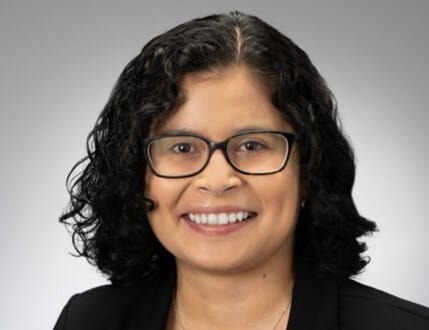 Jenny Ruiz, MD, MSCE, assistant professor of Pediatrics in the Division of Pediatric Hematology/Oncology at UPMC Children’s Hospital of Pittsburgh, was awarded a 2025 Hyundai Hope on Wheels Young Investigator Grant to support her research on communication barriers in pediatric oncology.
Dr. Ruiz’s project is focused on how language discordance between families and clinicians influences comprehension, trust, decision making, and clinical outcomes among parents of pediatric cancer patients whose primary language is not English.
Dr. Ruiz’s new project builds on her ongoing research investigating the social and structural drivers of health in pediatric cancer care. These include disparities in access to care, inequities in communication quality, and the underrepresentation of non-English-speaking families in research and quality improvement efforts. One area of emphasis in this work is Dr. Ruiz’s interest in how language, health literacy, and clinician communication behaviors affect the quality of the clinical encounter.
“I want to ensure that every family, regardless of language, education level, or background, receives high-quality communication throughout their care journey,” says Dr. Ruiz. “This includes understanding the diagnosis, navigating treatment, and feeling like they are truly part of the team. The reason is simple: without these things, care suffers.”
Interpreter services are a critical resource in any health system, but the presence of an interpreter alone does not guarantee equitable or effective communication, nor are interpreters always available or available immediately. The complexity of pediatric cancer discussions and their often emotionally charged and technically dense provider-patient communication dynamics creates significant risk for miscommunication when this information is relayed through third-party interpretation.
“Even in English, oncology discussions involve highly technical content. When layered with a language barrier, families may feel hesitant to ask clarifying questions or raise concerns,” Dr. Ruiz says. “That can often lead to mistrust, alienation from the process, and even missed opportunities for care or follow-up.”
As part of this work she is currently conducting with plans to publish on in the future, Dr. Ruiz has interviewed Spanish-speaking caregivers of children with cancer to better understand their communication experiences. Many have described receiving less detailed information, feeling hesitant to ask questions, and at times feeling excluded from the clinical team. Caregivers emphasized the need for open communication, encouragement to ask questions, and repeated reassurance from providers.
“We can do more to make sure that caregivers feel comfortable asking the same question five or 10 times,” Dr. Ruiz says. “That kind of repetition is often necessary for families to fully process complex medical information, especially when a language barrier is involved. Providers need to actively encourage questions and demonstrate that it is okay to ask for clarification repeatedly without judgment or frustration so that families feel they are truly part of the care team.”
Dr. Ruiz’s Hyundai Hope on Wheels grant will support qualitative interviews with pediatric oncologists and professional medical interpreters to explore their experiences communicating with families across language barriers. Topics include perceived strengths and weaknesses in communication skills, challenges encountered when using interpretation services, and what types of training or structural interventions would be most helpful.
“I want to understand what clinicians believe is working well, what they would improve, and what resources might help them better support families,” Dr. Ruiz says.
As a potential next phase of the project, Dr. Ruiz is considering capturing actual communication encounters in hospital or clinic settings to observe how conversations unfold in real time. These data would help confirm whether the themes reported in interviews align with actual communication practices and would inform the design of future interventions.
“If we want to build meaningful interventions, we need to triangulate caregiver experience, clinician insight, and the actual communication that is happening in the room,” Dr. Ruiz says.
Dr. Ruiz’s personal background as a native Spanish speaker shaped her interest in health communication research. As a teenager, she accompanied her grandfather to medical care visits and served as his informal interpreter, an experience that exposed her early to the structural and interpersonal challenges that language barriers can create for patients and their families.
“I was 16 years old, interpreting medical conversations I didn’t fully understand. That should not have been my responsibility, of course, but it showed me how much room there is to improve how we serve multilingual families,” Dr. Ruiz says.
Dr. Ruiz’s clinical interest in pediatric oncology began after a family member was diagnosed with leukemia during her undergraduate years. That experience, combined with exposure to team-based oncology care, shaped her path toward a career that blends direct patient care with health equity research.
With federal funding for biomedical research becoming increasingly constrained, particularly for health equity research, philanthropic support plays a needed role in sustaining early-stage investigators like Dr. Ruiz.
“This year, I would not have had funding for my research if it weren’t for Hyundai Hope on Wheels,” Dr. Ruiz says.
The Foundation’s decision to increase grant award amounts in 2025 reflects a growing recognition of the gap in public funding for rare disease and disparities-focused research at the federal level.
“I’m incredibly grateful for their support, not just for me, but for what it signals about the importance of language equity in pediatric oncology,” Dr. Ruiz says.
2025 Hyundai Hope on Wheels Grants.
Below is a selection of recently published research from Dr. Ruiz about her work on language barriers in pediatric oncology care.

