

Password Reset
Forgot your password? Enter the email address you used to create your account to initiate a password reset.


Forgot your password? Enter the email address you used to create your account to initiate a password reset.
6 Minutes
The Division of Pediatric Nephrology at UPMC Children’s Hospital of Pittsburgh continues its investment in the next generation of kidney scientists through the Summer Research Internship Program in Kidney Disease (SRIP-Kid).
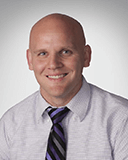
The program is codirected by Sunder Sims-Lucas, PhD, professor of pediatrics and developmental biology and research director for the Division of Pediatric Nephrology; Jacqueline Ho, MD, MS, professor of pediatrics and chief, Division of Pediatric Nephrology; and Manisha Jhamb, MD, MPH, professor of medicine and associate division chief, Renal-Electrolyte Division. The program is supported by a National Institute of Diabetes, Digestive and Kidney Diseases R25 grant.


Launched in 2021, SRIP-Kid offers undergraduate students from across the United States a mentored immersion into basic, translational, and clinical kidney research in pediatric and adult nephrology. The program introduces participants to fundamental laboratory and clinical research methods, providing early exposure to how scientific research is conducted in the real world and how discoveries in the lab are translated into clinical patient care.
“The goal is to expose students to the full continuum of kidney research that we do, from molecular biology to how that research could be translated into some type of patient care, be it a drug or otherwise, while helping them identify where they could fit along that spectrum of scientific discovery,” Dr. Sims-Lucas says.
SRIP-Kid is a part of the larger Summer Research Internship Program (SRIP) at the University of Pittsburgh, which hosts multiple summer cohorts of undergraduates each year in various clinical disciplines.
Mentorship is a core feature of the SRIP-Kid program. Each student is paired with a faculty mentor and receives daily oversight from postdoctoral fellows and senior trainees. Weekly seminars cover research ethics, presentation skills, and professional development, ensuring that the internship experience goes beyond just what happens at the bench.
Returning students to the program take on formal leadership roles, supervising first-year interns on the basics of the program, how it functions, and what are the expectations.
“We try to give second-year students supervisory responsibility for first-year participants,” Dr. Sims-Lucas says. “It helps them appreciate what it means to train others and strengthens the collaborative culture of our research groups.”
This type of mentoring structure reflects the collaborative environment of academic science and gives the interns early exposure to independent and peer-led modes of scientific inquiry.
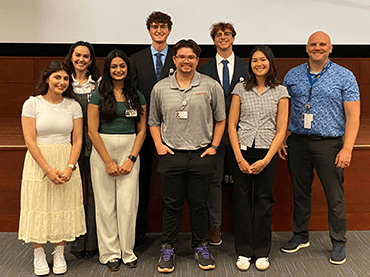 Among the 2025 SRIP-Kid student interns was Brendon Frankel, a senior at the University of Maryland majoring in cell biology and molecular genetics. Frankel has a multiyear association with the program is an example of what the program is designed to achieve.
Frankel first joined the Sims-Lucas Laboratory as a high school volunteer and has since completed three consecutive SRIP-Kid internships.
“I started as a volunteer in high school through a connection my counselor made with Dr. Sims-Lucas,” Frankel says. “Each summer since then, I’ve taken on new responsibilities, from learning lab techniques in my first year, to designing my own project the next, and most recently mentoring incoming interns while continuing my own research project.”
In his initial internship, Frankel acquired basic lab skills, including pipetting, reagent preparation, and microscopy, and at the same time, shadowing experimental design processes. The next year, he progressed to an independent project examining acute kidney injury (AKI) and cellular stress responses triggered by mitochondrial dysfunction, one of the main lines of investigation in Dr. Sims-Lucas’ laboratory.
“I became interested in the inflammatory aspects of AKI and how macrophages and other immune markers respond during injury and repair,” Frankel says.
In 2025, Frankel’s research project focused on a therapeutic compound being studied by Dr. Sims-Lucas’s lab initially targeting mitochondrial metabolism in proximal tubule cells. The results of this research showed broader cytoprotective effects, including reduction of endoplasmic reticulum (ER) stress and preservation of cell structure in the kidney.
“The compound was originally designed to protect mitochondrial metabolism,” Frankel says. “We discovered through targeted mass spectrometry that it also leaves molecular signatures in other cellular compartments, including the endoplasmic reticulum. The research showed that treatment reduced ER stress and maintained cell structure, suggesting a broader cytoprotective effect in proximal tubule injury.”
Frankel presented his findings at the program’s annual Research Day where all the summer interns present a research poster detailing their work.
“Preparing the poster challenged me to integrate everything I had learned, from experimental data and analysis to the mechanistic rationale behind it. It was the first time I felt I could tell a complete scientific story,” Frankel says.
During his third internship, Frankel also served as a peer mentor for first-year students, providing guidance on the day-to-day expectations of working in a lab on a research project.
“I didn’t realize how much I had absorbed so far in my time in the program and working in Dr. Sims-Lucas’ lab until I began helping others,” Frankel says. “Mentoring new students was one of the most rewarding parts of the summer. It helped me see what effective mentorship looks like in practice.”
In prior years, Frankel also had the opportunity to attend the American Society of Nephrology Kidney Week in Philadelphia and San Diego, broadening his network and understanding of translational nephrology.
“Discussing science with investigators during the day and connecting with my lab colleagues afterward gave me a sense of belonging in the field,” Frankel says.
As Frankel completes his undergraduate studies, he plans to apply to medical school and pursue the Physician Scientist Training Program at the University of Pittsburgh.
“Dr. Sims-Lucas is on the program’s faculty, and I hope to continue our work there if I am accepted,” Frankel says. “Regardless of where I end up, medicine and biomedical research are what I want to pursue.”
His long-term research interest centers on translating findings into clinical decision making in nephrology, particularly individualized care and dialysis timing.
“I’m drawn to questions about how we make treatment decisions and how we can individualize care for patients,” Frankel says. “Combining basic science and clinical process improvement could meaningfully change outcomes.”
By integrating basic science, translational investigation, and clinical exposure within a structured and sustained mentoring environment, the SRIP-Kid program supports the Division of Pediatric Nephrology’s academic mission of training clinician-scientists who will advance kidney research and patient care.
“We’re hopeful the program will be funded again by the NIH to keep momentum and attract motivated students to careers in research and medicine,” Dr. Sims-Lucas says.
Learn More

