

Password Reset
Forgot your password? Enter the email address you used to create your account to initiate a password reset.


Forgot your password? Enter the email address you used to create your account to initiate a password reset.
7 Minutes
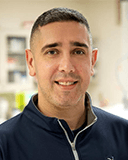 Since January 2026, Paulo Coelho, MS, MBA, has served as the director of the Bethel Musculoskeletal Research Center (BMRC) Biobank, which was launched in October 2024 to accelerate the discovery of biomarkers and therapeutic targets for musculoskeletal conditions and enhance patient outcomes through more personalized orthopaedic treatments.
Previously, he served as the laboratory manager of the Ferguson Laboratory for Orthopaedic and Spine Research where he managed daily laboratory operations, supported grants associated with the lab’s research, including its current work funded through the National Institutes of Health’s Helping to End Addiction Long-term (HEAL) Initiative, and coordinated resources and workflows across multidisciplinary research groups investigating a range of spinal conditions.
Mr. Coelho first joined the Ferguson Laboratory as a research technician in 2006. His progression from the laboratory bench to managing large-scale research and biobanking efforts reflects the scientific and operational expertise he has developed within the laboratory, as well as across Pitt’s other labs and the greater University of Pittsburgh ecosystem, which strives to cultivate great talent from within.
Originally from Portugal, Mr. Coelho came to the United States to study chemistry at the University of Miami on a scholarship to play for the university’s Division I basketball team. He earned his bachelor’s degree in 2003 and then earned a Master’s degree in biomedical sciences from Barry University in 2005 before moving to Pittsburgh.
How Mr. Coelho found and first ended up at the Ferguson Lab is an interesting story of a chance encounter.
“My first connection to the lab and Dr. Sowa happened in an unexpected way,” Mr. Coelho says. “After moving to Pittsburgh where my wife is originally from, I received my work permit and I took a job at a retail store in the area. As it turned out, Dr. Sowa’s (Gwendolyn Sowa, MD, PhD, chair, Department of Physical Medicine and Rehabilitation and codirector, Ferguson Laboratory) mother was the store manager. She learned that I had a background in chemistry and biomedical sciences and mentioned me to her daughter, who at the time had recently joined UPMC and the University of Pittsburgh. Dr. Sowa and I spoke several times, and she hired me as a research technician in her lab. I believe I was one of her first hires at Pitt and certainly one of the early members of her research lab.”
Mr. Coelho’s initial work as a research technician in Dr. Sowa’s lab involved experiments that examined the effects of mechanical stress on spinal cells. The laboratory used compression chambers and flexible culture plates that allowed cells to be compressed or stretched under different conditions. PCR analyses then showed how gene expression changed in response to the duration and intensity of those mechanical forces, linking cellular experiments to the physical forces acting on the human spine. He also handled tissue specimens obtained from orthopaedic operating rooms, gaining early experience handling and managing biological materials, which is now a core of his daily work as the BMRC Biobank director.
After several years working as a research technician, Mr. Coelho advanced to laboratory manager as Dr. Sowa’s research activities expanded. The new role moved him beyond responsibility for his own experiments. He began supporting medical students, summer research students, international postdoctoral researchers, UPMC residents, physicians, and faculty members working on different projects in the lab.
“As a lab manager, you become the glue or connective tissue among many different people,” Mr. Coelho says. “You need a general understanding of what everyone is working on, where they are in the process, and how you can help them move their research forward.”
The lab manager role also gave Mr. Coelho exposure to the other sides of conducting research in a busy lab: budgets, personnel, compliance requirements, and the operational systems underlying scientific research at a large, interconnected academic medical center. Although he continued to enjoy bench work, Mr. Coelho became increasingly interested in how those components functioned within institutions as large as Pitt and UPMC.
“I enjoyed the bench science and still do, but I also became interested in running laboratory budgets and the operational and business side of science,” Mr. Coelho says. “It’s a very different aspect of conducting research, but it’s essential to keeping those projects moving forward.”
To pursue this interest, Mr. Coelho earned an MBA in finance from the University of Pittsburgh in 2014.
“The conventional opportunities for advancement in bench science are often tied to earning a PhD. I was considering what other paths I could follow, and I also had an interest in finance and capital markets,” Mr. Coelho says. “An MBA gave me a way to develop those interests and determine how I could combine them with my scientific background. Dr. Sowa was very supportive. She gave me the flexibility to attend courses that were important to my training while still working in the lab.”
The NIH-funded Low Back Pain Biological, Biomechanical, and Behavioral Phenotypes (LB3P)* project in the Ferguson Lab enrolled more than 1,300 participants over five years. Its size and multidisciplinary structure created scientific, administrative, and biospecimen-management demands distributed across several departments.
As part of the LB3P project, Mr. Coelho was responsible for specimens entering the laboratory. He implemented an existing Pitt-UPMC system that recorded the specimens in a database, tracked their physical locations in laboratory freezers, and linked them to the corresponding participant information.
The project required the same ability to connect people and resources that Mr. Coelho had developed as laboratory manager, now applied across a large clinical cohort. He is currently helping to manage the LB3P five-year follow-up study, which, like the original project, is funded through the NIH HEAL Initiative.
“The five-year follow-up allows us to evaluate how participants have changed since their initial assessments. The value of the original collection increases when we can connect baseline biological, biomechanical, behavioral, imaging, and clinical information with what happens to each participant over time,” Mr. Coelho says.
When plans emerged for a musculoskeletal biobank within the Bethel Musculoskeletal Research Center, Mr. Coelho recognized that his work in the Ferguson Lab had prepared him for many of its operational demands.
“This is what I had done for more than a thousand people in the LB3P study, so I wanted to see what it would look like at a larger scale and with a larger impact,” Mr. Coelho says.
Mr. Coelho approached Ferguson Lab Clinical Director and BMRC Executive Director, Joon Y. Lee, MD, and proposed that he could help develop the Biobank while continuing to support the efforts of the Ferguson Lab. Mr. Coelho’s initial work with the BMRC Biobank helped establish the specimen workflows, database and storage systems, and website functions, including a new iteration of the website that launched in June 2026, which features a real-time inventory summary of available data and surgical collections as they proceed. That work led to his appointment as the Biobank’s director.
“I have enjoyed each stage of the work I’ve done at Pitt for the last 20 years,” Mr. Coelho says “I enjoyed conducting experiments at the bench. I appreciated becoming the person who could connect students, residents, postdoctoral researchers, physicians, and faculty members within the laboratory. The MBA allowed me to add financial and operational knowledge. LB3P and the BMRC Biobank have given me opportunities to apply all of those skills to projects with much greater scale.”
*Biological, Biomechanical, Behavioral Phenotypes (LB3P) Mechanistic Center of the Back Pain Consortium Research Program (BACPAC), part of the National Institutes of Health Helping to End Addiction Long-term Initiative administered by the National Institute of Arthritis and Musculoskeletal and Skin Diseases (NIAMS) of the National Institutes of Health (NIH).
For specimen access, contract inquiries, feasibility questions, or media and philanthropic partnerships, email the BMRC Biobank team at biobank.bethel@pitt.edu.

